

What if the right time to hire a virtual assistant is before routine tasks crowd out the work only you can do? If leads are going unfollowed, administration is spilling into your evenings or projects are becoming harder to track, a trusted virtual assistant can bring structure to your day.
It’s reasonable to want dependable support without losing oversight of your business. Start by identifying work you can delegate clearly, agreeing how you’ll communicate and setting up simple ways to track responsibilities and progress.
This article covers signs it may be time to hire, how to manage the working relationship and what to consider when a role involves software or AI tools. You’ll also learn how to define the support you need, set expectations and build a practical foundation for working together.
Key Takeaways
- Recognise when recurring tasks, missed follow-ups or coordination demands are signalling a need for additional support.
- Set clear responsibilities, communication routines and progress checks to make delegated work easier to manage.
- Consider how software and AI tools fit your workflows, with attention to access, accuracy and appropriate human oversight.
- Match the support you seek to your operational needs, from administrative assistance to CRM and project management support.
When is The Right Time to Hire a Virtual Assistant?
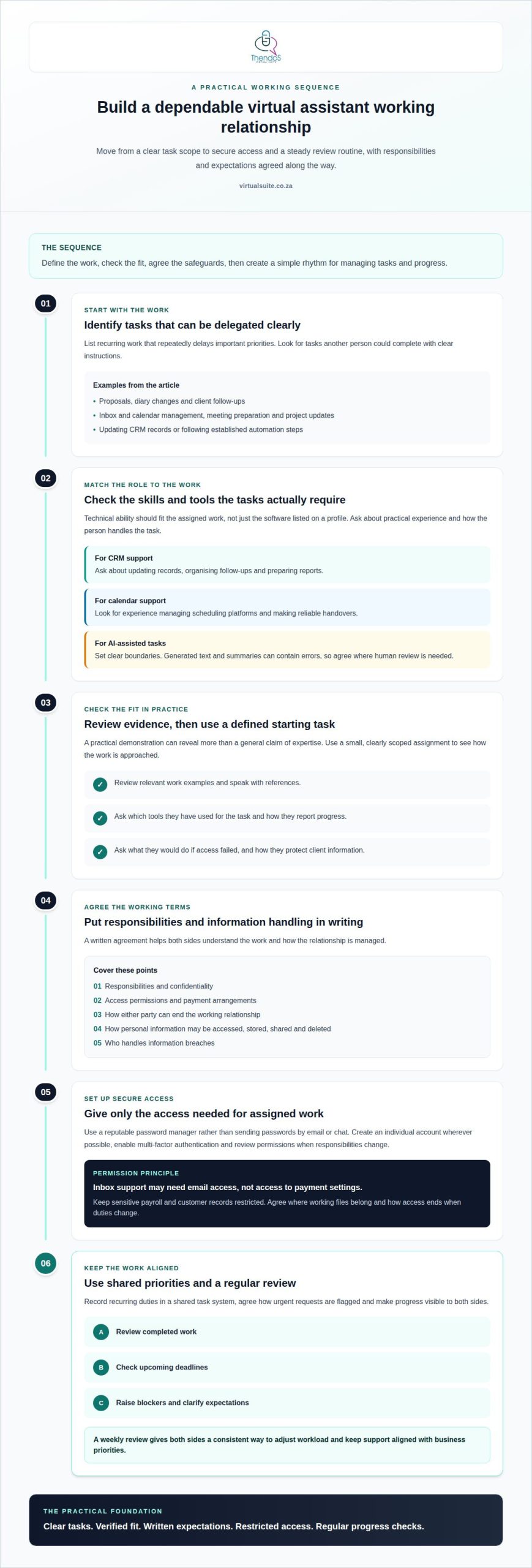
Consider support when routine work repeatedly delays important priorities, such as proposals, diary changes or client follow-ups. List recurring tasks and identify those another person could complete with clear instructions. If you’re updating spreadsheets during working hours instead of speaking with prospective clients, delegation may help.
Support can range from calendar management to project coordination. For example, a property manager may need help organising viewing appointments, maintenance requests and tenant communications. Customer Support can manage routine enquiries, while a backup assistant can maintain essential workflows during planned leave. Business Tools & Systems Support may include updating CRM records or following established automation steps. Payroll information requires careful, restricted access.
An in-house assistant works within an organisation’s employment structure and daily routines. A virtual assistant generally provides remote support, while an agency recruits or coordinates assistants for clients. The right arrangement depends on the oversight, continuity and task scope you need, and how closely the role must integrate with internal teams.
Use a written agreement to define responsibilities, confidentiality, access permissions, payment arrangements and how either party can end the working relationship. For South African data privacy, specify how personal information may be accessed, stored, shared and deleted. Limit account permissions to necessary tasks and document who handles information breaches.
In South Africa, recruit through a defined process, either directly or through an agency. Review relevant work examples, speak with references and agree on a small, clearly scoped starting assignment. Watch for misleading credentials, excessive access requests and payment pressure. Identity checks, written terms and staged access can help reduce these risks. A trusted virtual assistant should be able to explain their process clearly, without requiring unrestricted access at the outset.
The National Center for Biotechnology Information notes that IVA vendors store voice data, which unauthorised parties could use to identify people or create voice artefacts for impersonation.
Benefits and management of virtual assistants for small businesses
For a small business, delegating repeatable administration can protect a manager’s time for decisions, clients and delivery. Clear task ownership and regular reviews help keep remote support aligned with business priorities.
Services for busy managers
Virtual support can include inbox management, calendar management, meeting preparation, follow-up tracking and project updates. For example, an Executive & Administrative Support assistant might organise a manager’s appointments and flag messages that need a decision, while a small team assistant updates task statuses. Agree responsibilities, preferred English communication and reporting arrangements before work begins.
Virtual assistant support can include coordination of tasks and support arrangements, while a recurring plan can structure planned work. Before choosing an approach, define the tasks, expected availability and how progress will be reported. You can then assess whether the arrangement suits changing workloads, without assuming every task needs the same level of support.
Sharing passwords and business information
Share access through a reputable password manager rather than sending passwords by email or chat. Create an individual account for the assistant wherever possible, enable multi-factor authentication and grant only the permissions needed for assigned work. For example, inbox support may require email access, not access to payment settings.
Agree in writing which client or business information can be handled, where working files belong and how access ends when duties change. Keep sensitive payroll and customer records restricted, and review permissions when responsibilities shift. These controls help protect information while allowing an assistant to complete authorised tasks.
To manage the working relationship, record recurring duties in a shared task system, set priorities and agree how urgent requests are flagged. A weekly review of completed work, upcoming deadlines and blockers gives both sides a consistent way to adjust workload and clarify expectations.
Technical expertise in software and AI tools
A virtual assistant’s technical ability should match the work, not simply the software listed on a profile. For example, CRM support may involve updating records, organising follow-ups and preparing reports. AI tasks need clear boundaries, since generated text or summaries can contain errors. A capable assistant explains their process and where human review remains necessary.
To find and verify a trustworthy virtual assistant in South Africa, review relevant work examples, speak with references and agree on a small, defined task. Ask how they protect client information and handle access to business systems. A practical demonstration can show more than a general claim of expertise.
Useful experience depends on the tasks. For calendar support, look for experience managing scheduling platforms; for CRM work, ask about data entry, record organisation and reporting. Remote professionals should also demonstrate clear written communication, reliable handovers and confidence using shared documents. A trained assistant can explain how they learned a system and adapt to documented procedures.
Company experience and founding dates offer context, but don’t prove technical fit by themselves. Ask which software they’ve used, what tasks they handled and how recently they worked remotely. For example, ask how they would organise a client’s inbox or check an AI-generated draft before sending it.
Before hiring, ask: “Which tools have you used for this task?”, “How do you report progress?” and “What would you do if access failed?” Answers should describe practical steps, not broad assurances. A clear working process makes remote collaboration easier to assess and manage.
For help aligning day-to-day support with your business systems, explore virtual assistant support.
Thendo’s Virtual Suite: Virtual assistant support
Thendo’s Virtual Suite provides virtual assistant support and structured operational support for founders and busy professionals who need dependable help with day-to-day business tasks. When client records need organising, Business Tools & Systems Support can help with CRM updates and clearer lead and client tracking. Project Coordination can help organise tasks, timelines and shared responsibilities.
This support is useful when recurring administration takes attention away from client relationships or business priorities. A defined task list, agreed processes and clear access boundaries give the working relationship a practical foundation. Start by identifying the responsibilities that need attention and the systems involved.
If you’re ready to discuss support that fits your working needs, book a consultation with Thendo’s Virtual Suite.
Make space for your next stage of growth
Bringing in a trusted virtual assistant can be part of a broader decision about how you want your business to operate. Before taking the next step, identify one area where clearer ownership would help protect your time for the work that matters most.
Use that priority to shape a practical starting point, with responsibilities and ways of working that suit your business. A measured approach lets you build a working relationship around real needs rather than assumptions.
Explore a considered next step with Thendo’s Virtual Suite and move towards a more intentional way of working.

Article by
Thendo Sadiki
CEO of Virtual Suite