

A dependable virtual assistant does more than take tasks off your desk. Choosing virtual assistance for busy professionals means matching support to your workload, the skills required and the reliability and communication you expect. Flexible support can also adapt as your schedule changes.
It’s understandable to focus first on what you can delegate, but trust and clear working practices matter just as much. This guide explains how to compare services across flexibility, skills, vetting, reliability and communication, so you can make a considered choice. You’ll also find a practical decision guide to help identify the kind of support that best fits your professional routine.
Key Takeaways
- Choose a support arrangement that can adapt to changes in your workload and schedule.
- Match delegated tasks to the assistant’s relevant skills, from diary coordination to project administration.
- Set clear expectations for communication, task ownership and progress updates to build a reliable working relationship.
- Consider structured operational support when administrative work, CRM tasks or project coordination are taking focus from your core responsibilities.
Flexible use of virtual assistant services
Choose support based on the tasks you need to delegate and how your workload changes. Assess the skills, communication and oversight each task requires before deciding.
Selecting a Virtual Assistant Service
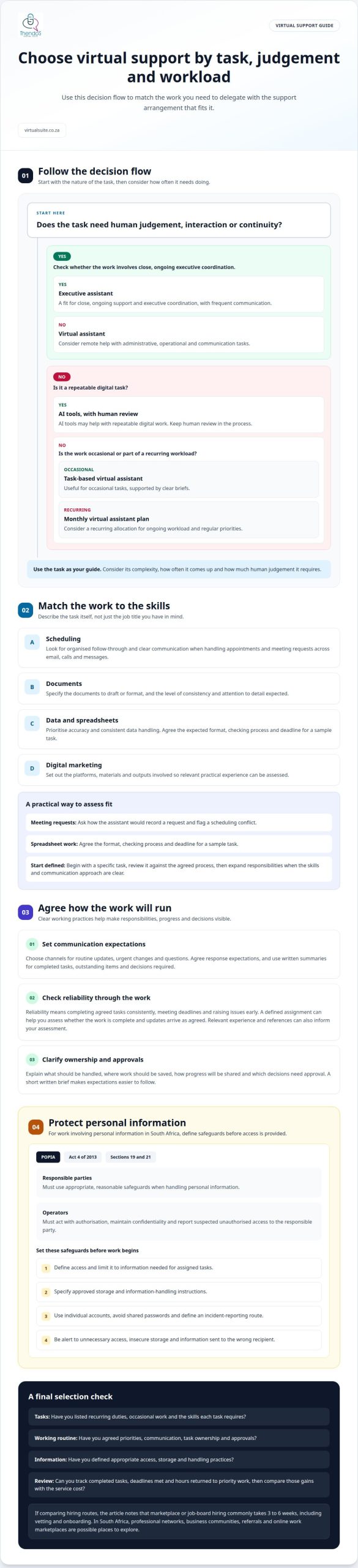
List recurring tasks, required skills and expected communication, then compare services against that brief. A virtual assistant can support work as needed, while marketplace or job-board hiring commonly takes 3 to 6 weeks, including vetting and onboarding. In South Africa, explore professional networks, business communities, referrals and online work marketplaces. Measure performance by tracking completed tasks, deadlines met and hours returned to priority work; compare those gains with the service cost to assess return on investment.
Pricing and Monthly Service Plans
Start by listing recurring responsibilities and occasional tasks, then decide what needs ongoing coordination. Consider how the support can adapt when priorities shift, and clarify what you expect to be handled, how progress will be shared and who approves key decisions. A defined scope makes it easier to judge whether support fits your working routine.
Executive Assistants
An executive assistant may work in-house and provide close, ongoing support, while a virtual assistant works remotely and can help manage administrative, operational and communication tasks. AI tools may help with repeatable digital tasks, but a human assistant can interpret context, coordinate requests and communicate with people. For virtual assistance for busy professionals, consider the judgement, interaction and continuity each task needs.
| Option | Flexibility | Best fit | Oversight |
|---|---|---|---|
| Task-based virtual assistant | As needed | Occasional tasks | Clear briefs |
| Monthly virtual assistant plan | Recurring allocation | Ongoing workload | Regular priorities |
| Executive assistant | Closer, ongoing support | Executive coordination | Frequent communication |
| AI tools | Digital task use | Repeatable processes | Human review |
Choose support that matches the complexity of the tasks, your workload patterns and the level of human judgement required.
Matching assistants to required skills
Match tasks to relevant skills rather than choosing support by job title alone. First, separate recurring duties from specialist work. Meeting coordination, for example, calls for careful scheduling, while spreadsheet preparation requires accuracy and confidence handling data. A clear task list helps you identify the experience each responsibility demands.
- Scheduling: organise appointments and handle meeting requests across email, calls and messages.
- Documents: draft or format business documents with consistent attention to detail.
- Data: enter information and prepare spreadsheets accurately.
- Digital marketing: assist with online marketing tasks that suit the person’s experience.
Different duties call for different strengths. Scheduling requires organised follow-through and clear communication, while spreadsheet work depends on accurate, consistent data handling. For online marketing tasks, describe the platforms, materials and outputs involved so you can assess whether the assistant has relevant practical experience.
Assess fit with a practical example. Ask how the assistant would manage a meeting request received by email, record the details and flag a scheduling conflict. For spreadsheet work, agree on the expected format, checking process and deadline for a sample task. This reveals working habits as well as familiarity with the task.
Look for clear written communication, organisation, accuracy and sound judgement about when to clarify an instruction. Discretion matters when handling professional correspondence or business records. Agree how updates will be shared, where work should be saved and what requires approval. A short written brief makes these expectations easier to follow.
Begin with a defined task, such as coordinating incoming meeting requests, then review the work against the agreed process. Expand responsibilities once the required skills and communication approach are clear. This helps you match support to your actual workload, one task at a time.
Assistant vetting, reliability and communication
Before delegating sensitive work, assess reliability, communication and information handling. In South Africa, POPIA sets duties for organisations handling personal information, including when another person processes it on their behalf.
Assistant Reliability
Reliability means completing agreed tasks consistently, meeting deadlines and raising issues early. Discuss a realistic scenario, such as an urgent diary change, and ask how the assistant would handle it. Start with a defined assignment, then assess whether the work is complete and updates arrive as agreed. Relevant experience and references can also help you understand how the person has managed similar responsibilities.
Assistant Communication
Clear communication keeps responsibilities and decisions visible. Agree which channel to use for routine updates, urgent changes and questions, and set expectations for response times. A written summary can record completed tasks, outstanding items and decisions required. Explain how to flag a scheduling conflict or missing information so important issues don’t get overlooked in an inbox.
Privacy, Data Protection and Confidentiality Risks
Under sections 19 and 21 of South Africa’s Protection of Personal Information Act 4 of 2013, responsible parties must use appropriate, reasonable safeguards, while operators must act with authorisation, maintain confidentiality and report suspected unauthorised access to the responsible party. Risks include unnecessary access to client records, shared passwords, insecure storage and information being sent to the wrong recipient. Before work begins, define access, approved storage, handling instructions and an incident-reporting route. Limit access to information needed for assigned tasks and use individual accounts.
For support with clear communication and careful task handling, explore virtual assistant support.
Thendo’s Virtual Suite: Virtual assistant support
Thendo’s Virtual Suite provides virtual assistant support for busy professionals who need dependable help with recurring responsibilities. Turn to the service when calendar coordination, administration or follow-ups are competing with work that needs your direct attention.
Support can be shaped around the practical demands of your working day. Calendar management helps organise appointments, while project coordination keeps tasks and timelines visible. CRM management can help maintain orderly client records and follow-ups, and structured operational support can bring recurring work into a clearer routine.
To get started, identify the responsibilities taking most of your attention, the information involved and how you prefer to communicate. These details provide a clear basis for discussing your priorities and support needs. Book a consultation with Thendo’s Virtual Suite to explore the right next step.
Make space for the work only you can do
A more manageable workload starts with deciding where your attention matters most. Consider which responsibilities need your judgement and which can be handled with clear instructions and dependable support. This distinction can help you protect time for clients, decisions and professional goals.
Treat virtual assistance for busy professionals as a considered way to shape your working day, not simply a way to move tasks elsewhere. Start with one area of friction, define the outcome you need, and use that as the basis for a practical conversation about support. A thoughtful first step can help you build a more sustainable rhythm without changing everything at once.
If you’re ready to explore what support could look like for your workload, contact Thendo’s Virtual Suite. A clearer way forward can begin with one considered conversation.
Frequently Asked Questions
What tasks can a virtual assistant handle for busy professionals?
A virtual assistant can take on administrative, operational and personal tasks, depending on the support you need. For example, support may include travel planning, expense tracking, content scheduling or document preparation. A consultant might delegate organising expense records, leaving more time to review figures and make business decisions.
How much does a virtual assistant cost in South Africa?
When assessing virtual assistant support, first define the responsibilities, their complexity and how often they need attention. Specialist tasks may call for different skills from routine administration. A clear scope helps you discuss the support required and judge how well it fits your workload.
What are typical virtual assistant hourly rates and monthly packages in South Africa?
Hourly rates and monthly packages are different ways providers may structure fees, but the amount and included work vary. Compare the scope, time allocation, task types and arrangements for changing priorities. A professional needing occasional document preparation has different requirements from a business seeking ongoing coordination, so compare the service against your actual workload.
How do I hire a reliable virtual assistant in South Africa?
Write a clear brief describing the outcomes, tools and responsibilities involved. Review relevant experience and references, then discuss how the assistant would approach a realistic task from your work. Before starting, agree how priorities will be updated and how completed work will be reviewed. These steps help establish a considered working relationship from the outset.

Article by
Thendo Sadiki
CEO of Virtual Suite