

The most useful support for a busy professional isn’t always another full-time hire. A virtual assistant for professionals can provide remote administrative, technical or creative support, usually through a contractual arrangement, helping manage recurring work without adding another role to the internal team. Virtual assistants commonly support small businesses as well as busy executives.
It makes sense to want dependable help while keeping clear oversight of client relationships and day-to-day operations. This guide explains the tasks professionals can delegate, how to clarify responsibilities and how virtual support can contribute to smoother business operations. You’ll also learn what to consider when choosing tasks to hand over and how to set up the work clearly.
Key Takeaways
- Match delegated tasks to the kind of support you need, from routine administration to project coordination.
- Choose a working arrangement that gives you clear responsibilities, communication and continuity.
- Look for operational tasks that can be organised more consistently, such as lead follow-ups and client management.
- Use structured support to bring more order to your workload and keep your attention on professional priorities.
Virtual assistant roles and services
A virtual assistant can handle agreed tasks remotely. For example, an assistant might organise a consultant’s calendar, prepare meeting materials and update client records. Other tasks include inbox management, research, document preparation and project coordination. The right responsibilities depend on your priorities and the support you need.
Virtual assistant roles typically don’t require a specific educational background. Practical experience, clear communication and familiarity with relevant tools can matter for particular assignments. A professional who needs CRM updates, for instance, should define the records to update and the information to capture. For presentation support, agree the format, audience and review process.
- Administration: schedule appointments, prepare documents and organise email.
- Client coordination: record enquiries, arrange meetings and track follow-up actions.
- Technical tasks: maintain digital records or update information in agreed systems.
- Creative support: prepare draft content or organise materials for a campaign.
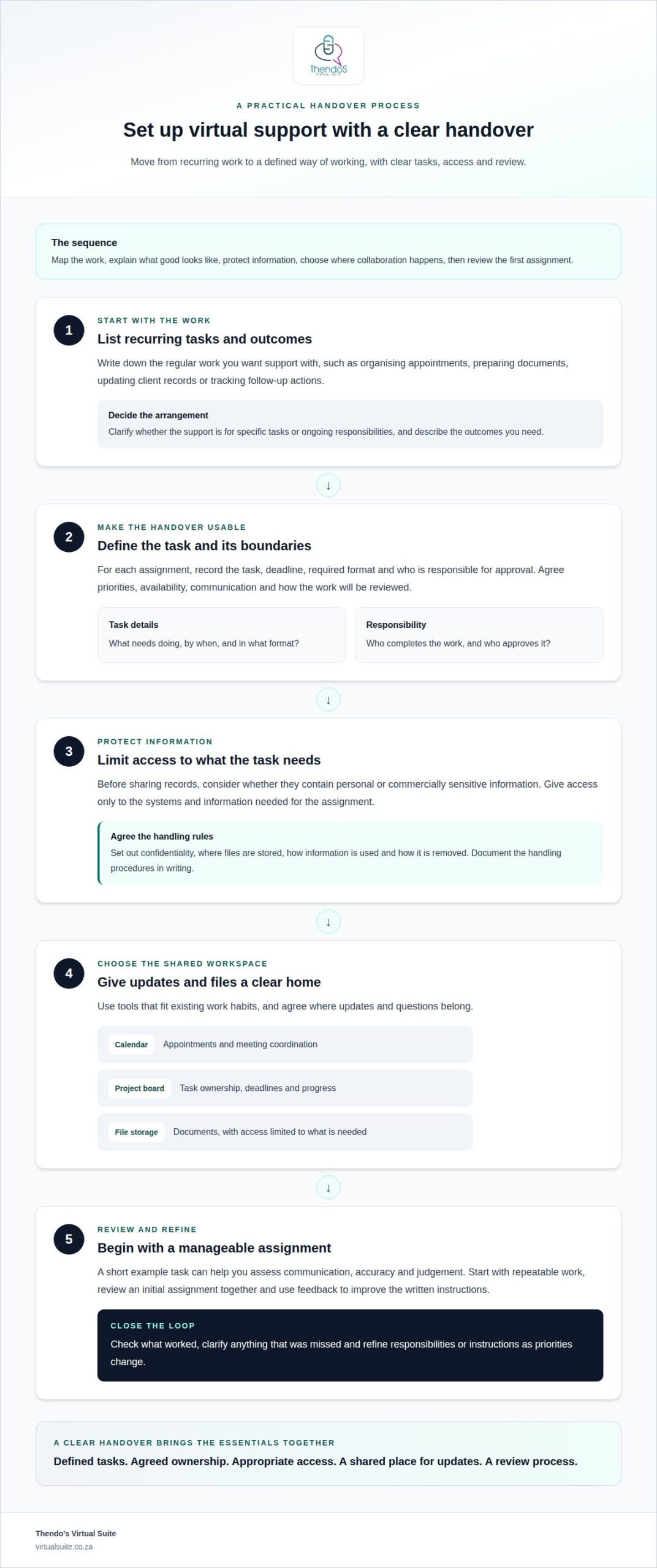
Before delegating, list the task, deadline, required format and person responsible for approval. A clear handover helps the assistant work consistently and gives you a defined point for review. Start with a repeatable task, such as preparing meeting materials, then refine the instructions using feedback.
Risks include errors, missed expectations and unauthorised access to confidential client information. Protect sensitive records by sharing only necessary access, setting clear handling instructions and agreeing how files are stored, used and removed. For more guidance, see these confidential virtual assistant support privacy practices.
In South Africa, professionals can also consider whether a task involves personal or commercially sensitive information before sharing it. Keep access limited to the systems and records needed for the assignment, and document the steps for handling that information.
Virtual assistant work arrangements
Virtual assistants may work on a contractual basis, and arrangements can continue over time. Agree whether support is task-based or ongoing, then record the scope, availability, communication and review arrangements.
To choose a reliable assistant, compare relevant experience with the actual tasks. Use a short example task to assess communication, accuracy and judgement before agreeing on responsibilities.
For South African engagements, document the working arrangement and clarify who handles tax administration and agreed work terms. Limit access to personal information, and set out confidentiality and handling procedures in writing.
Professionals can find assistants through trusted referrals and professional networks in South Africa. A clear role description helps identify suitable experience and sets expectations from the outset.
To hire and onboard an assistant, first list recurring tasks and required outcomes. Then agree priorities, deadlines, approval steps and access permissions. Share written instructions and review an initial assignment together.
Remote collaboration can use a shared calendar for appointments, a project board for tasks and deadlines, and secure file storage for documents. Choose tools that fit existing work habits, then establish where updates and questions belong.
- Set task ownership and deadlines in a shared project board.
- Keep client information restricted to the records needed for assigned work.
- Review early tasks and refine written instructions together.
Professionals seeking help with recurring administrative work can explore virtual assistant support as one way to structure remote collaboration.
Featured candidate Lalah Madlala is listed as available for 40 hours per week. Before deciding whether that availability suits an engagement, match the expected workload and schedule to the role’s priorities. Discuss how ongoing responsibilities will be coordinated, how urgent requests will be handled and how progress will be reviewed. Confirm the agreed scope and communication approach in writing, so both sides have a clear basis for managing the work and adjusting arrangements when priorities change.
Virtual assistants in business
Virtual assistants generally work remotely from a home office. They’re commonly self-employed and provide administrative, technical or creative assistance. Small businesses often use this support, though busy executives may also delegate defined operational tasks.
In a consultancy, for example, support could include organising client records, updating a task board and preparing meeting materials. These activities connect routine administration with client service. Clear task ownership helps prevent follow-ups or project updates from being overlooked.
Work can be arranged around specific assignments or continued collaboration. Long-lasting cooperation is standard, so recurring responsibilities can become part of an established workflow. Agree how tasks arrive, who approves completed work and where progress is recorded.
Consider the role before comparing it with a salary-based position. A contractual arrangement centres on agreed tasks and outputs, while an employee role may involve a broader ongoing remit. The right structure depends on the work, required continuity and level of day-to-day direction.
- Map the workflow: note where requests arrive and how work moves towards completion.
- Define ownership: assign tasks, approvals and client communications clearly.
- Review the arrangement: adjust responsibilities as business priorities change.
For a South African professional, this might mean delegating appointment coordination while retaining responsibility for advice and client decisions. A defined handover keeps accountability clear and gives the assistant usable instructions.
If recurring administration is taking attention from core work, explore virtual assistant support as part of a more structured business workflow.
Thendo’s Virtual Suite: Virtual assistant support
Thendo’s Virtual Suite provides virtual assistant support for professionals who need dependable help with recurring work. If calendar coordination, client follow-ups or project updates are taking time away from your core responsibilities, structured support can help organise those tasks and clarify their ownership.
For example, CRM Management can help keep client information and follow-up activity organised, while Project Coordination can help track responsibilities and deadlines. Executive & Administrative Support includes scheduling and day-to-day business administration. Start with the task causing the most disruption, then agree priorities and review steps.
If you’re ready to discuss support for your work, contact Thendo’s Virtual Suite.
Choose a practical next step for your workload
Start by identifying one recurring responsibility that pulls attention away from your most valuable work. Define what a good handover would look like, including the outcome you need and how you’ll review it. This gives you a grounded basis for deciding whether a virtual assistant for professionals fits your working style and priorities.
Delegation works best when it supports the way you serve clients, rather than adding another layer of management. A clear first task can help you explore that balance while keeping responsibility and communication in view.
If you’re ready to consider what support could look like for your work, explore the next step with Thendo’s Virtual Suite. You can begin with a practical conversation about your priorities and move forward at a considered pace.
Frequently Asked Questions
What does a virtual assistant do for professionals?
A virtual assistant can create capacity by taking ownership of agreed work and making progress easier to review. For example, a business coach could receive a regular summary of completed client administration and outstanding decisions. This provides a clear review point without searching through separate messages for updates.
What services do professional virtual assistants offer?
Professional support can also include data analysis and accounting support. For a consultancy, data analysis might involve organising information into a report that supports a business decision. Accounting support could assist with routine financial administration. Set out the required output, relevant records and approval responsibilities before work begins, so the support fits your process.
What are the differences between a freelance virtual assistant and an agency?
The service name alone doesn’t explain who will handle your work or how the arrangement will operate. Clarify the point of contact, task ownership, communication route and process for managing changes. Then assess those details against your needs, rather than assuming a particular service structure or continuity.

Article by
Thendo Sadiki
CEO of Virtual Suite