

Delegate when routine work repeatedly takes attention away from responsibilities that depend on your judgement. A virtual assistant can be a practical option when you can describe the task, its desired outcome and the decisions that should remain yours. Finding trusted support for busy professionals starts with recognising that boundary, rather than waiting until every part of the working day feels overloaded.
It’s reasonable to want to retain control, especially when work involves clients, deadlines or sensitive information. A clear delegation list helps you decide what support would be useful, what guidance someone needs and how you’ll review the handover. This article explores how personal assistance can support entrepreneurs and small businesses, how support arrangements differ for individuals and larger teams, and what to consider when planning continuity. You’ll find a more deliberate way to identify tasks, set expectations and decide when outside support could make your working routine easier to manage.
Key Takeaways
- Identify recurring tasks that can be handed over with clear instructions, so you can protect time for work that needs your attention.
- Match the level of personal, team or enterprise support to the complexity of your workload and the people involved.
- Plan how delegated work will be documented and maintained, including what happens when regular support is unavailable.
- Consider structured operational support, CRM management or project management when administrative work is becoming harder to coordinate.
Personal assistant services for entrepreneurs and small businesses
Personal assistance can cover diary coordination, appointment booking, inbox organisation, travel planning and personal shopping. For example, a consultant in South Africa might delegate meeting bookings and routine enquiries to protect time for client work.
Working Hours and Assistant Availability
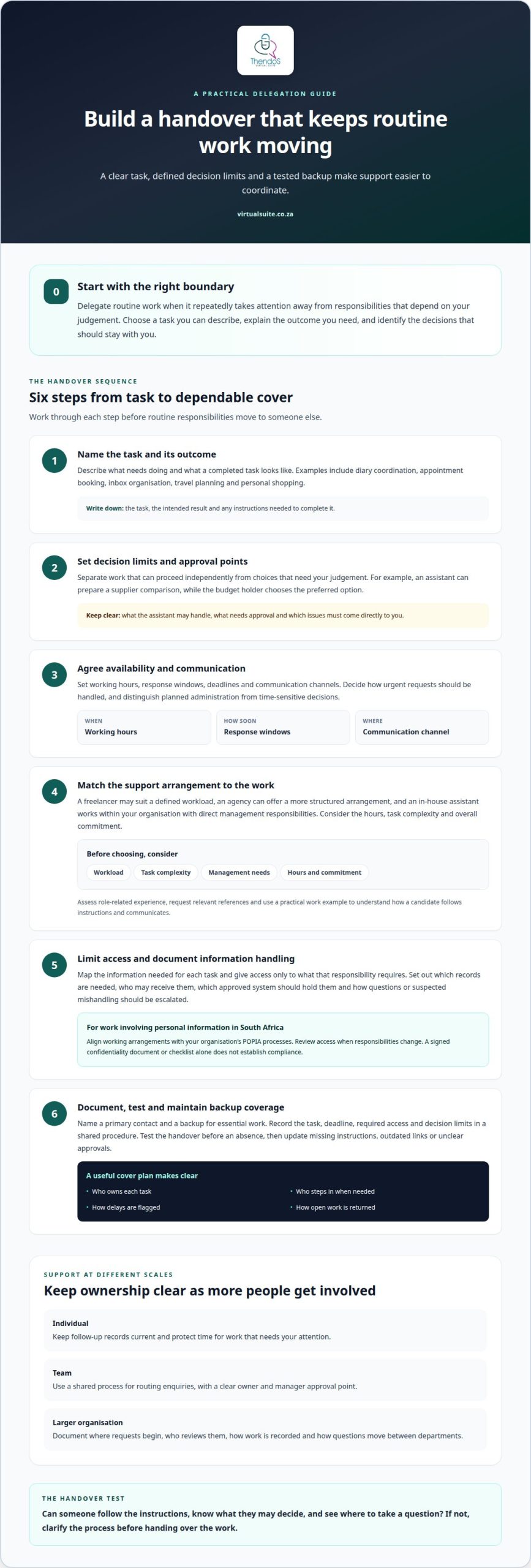
Agree working hours, response windows and how to handle urgent requests. For example, an assistant might manage weekday appointment changes, while a client issue requiring your judgement comes directly to you. Set expectations for working times, deadlines and communication channels. This separates planned administration from genuinely time-sensitive decisions.
Freelance, Agency and In-house Support
A freelancer may suit a defined workload, while an agency can offer a more structured arrangement. An in-house assistant works within your organisation, with direct management responsibilities. Costs depend on hours, task complexity and the arrangement, so consider the overall commitment. Reliability benefits from clear instructions, documented processes and an agreed plan for absence or delays.
AI tools can draft routine text, but human judgement matters when handling unusual requests or sensitive diary changes. Training should cover your systems, preferred tone and approval steps. Keep task guidance up to date whenever processes change.
In South Africa, LinkedIn and specialist recruitment services can help with candidate searches. Neither discovery route alone establishes suitability. Before providing system access, request relevant references and obtain consent for appropriate background checks. Assess role-related experience and use a practical work example to understand how candidates follow instructions and communicate. For guidance on confidential virtual assistant support, consider how confidentiality expectations and access controls are established.
Support for individuals, teams, and enterprise organisations
Match the support arrangement to the people involved, the decisions delegated and the systems used. An individual may need help keeping follow-up records current; a team may need a shared process for routing enquiries; a larger organisation may need clear ownership across departments. Define each task’s owner, intended outcome and approval point before assigning responsibility. This makes handovers easier to follow as work moves between people.
For a team, distinguish work that can proceed independently from actions requiring a manager’s decision. For example, an assistant might prepare a supplier comparison, while the budget holder chooses the preferred option. In a larger organisation, document where requests begin, who reviews them and how completed work is recorded. These details help prevent duplicated effort and give colleagues a clear route for questions.
For work involving personal information in South Africa, set out written handling instructions and control access. Specify which records are needed, the task they support, who may receive them and which approved system should hold them. Align these working arrangements with your organisation’s POPIA processes. A signed confidentiality document or checklist alone does not establish compliance.
Before granting access, map the information needed for each task and limit permissions to that scope. For example, someone updating an enquiry record may not need access to unrelated client files. Review access when responsibilities change, and record how questions or suspected mishandling should be escalated. These practices give individuals, teams and departments a clearer basis for responsible collaboration.
Dedicated support teams and backup coverage
A dedicated team can divide recurring work by responsibility, such as inbox triage, meeting preparation and project updates. For a small consultancy, one person might manage client scheduling while another maintains task records. The benefit comes from clear ownership, not simply adding more people. Name a primary contact for each task and document who steps in when that person is unavailable.
Build backup coverage around essential work. Record the task, deadline, required access and decision limits in a shared procedure. For example, a backup may reschedule a client meeting but refer changes to the project scope to the account lead. This distinction keeps routine work moving without giving cover staff authority they don’t need.
Test the handover before an absence arises. Ask the backup to follow the written steps for a routine task, such as preparing an agenda from the project tracker. Note any missing instructions, outdated links or unclear approvals, then update the procedure. Limit access to the systems and records needed for that responsibility.
Review the arrangement when workloads or team roles change. A growing agency may need a named owner for each client account, a shared task queue and an escalation route for urgent decisions. Agree how staff record completed work, flag delays and return open tasks. These simple rules make continuity visible to the whole team.
If delegation needs clearer ownership and handovers, plan your support coverage around the work your team needs to keep moving.
Thendo’s Virtual Suite: Virtual assistant support
Thendo’s Virtual Suite can help when routine tasks are crowding out client work or important decisions. Virtual assistant support can take care of delegated administrative responsibilities, while structured operational support brings clarity to recurring workflows. For example, Calendar Management can make appointments and schedule changes easier to coordinate.
If your delegation list includes client follow-ups or project coordination, CRM Management and Project Coordination can support more organised ways of working. Start by outlining the tasks you want to delegate, the outcomes you need and any approval steps involved. This gives the work a clear starting point and helps establish how support fits your priorities.
For a calm, practical conversation about your delegation needs, book a consultation with Thendo’s Virtual Suite.
Turn your delegation list into a practical next step
Choose one recurring task with a clear outcome, then write down the steps, boundaries and decisions that still need your approval. This first handover can reveal whether your instructions are complete and where a process needs clarification. A brief review when the task is finished helps refine the handover before you delegate more work.
A considered approach makes trusted support for busy professionals part of a well-organised working day, rather than a response to mounting pressure. Start with a single responsibility and build on what works for your routine.
If you’re ready to discuss your delegation needs, contact Thendo’s Virtual Suite. A clear starting point can help you move towards a steadier way of working.
Frequently Asked Questions
When is The Right Time to Hire a Virtual Assistant?
Consider hiring a virtual assistant when recurring tasks delay work that needs your expertise or attention. For example, if preparing client meeting materials regularly pushes back proposal work, document the preparation steps and identify what can be handed over. A repeatable task with a clear outcome is a more useful signal than a particularly busy week on its own.
What does trusted support for busy professionals mean?
It means having dependable assistance that follows agreed instructions, handles information discreetly and communicates clearly when something needs your decision. Trust develops through consistent work and clear boundaries, not a title alone. For example, an assistant might prepare a client update for your review, while you retain approval over commitments made in your name.
How can professionals verify a support provider’s credentials, reviews, and references?
Match the assistant’s experience to the tasks you plan to delegate, then look for specific examples of similar work. Read reviews for details about communication, accuracy and follow-through, rather than relying only on ratings. Request relevant references and discuss a realistic work scenario. A clearly scoped task can also show how the assistant interprets instructions and reports progress.
How can a busy professional find and onboard a trustworthy support provider?
Begin with a clear account of your priorities, systems and desired outcomes, then discuss how work will be organised and reviewed. Thendo’s Virtual Suite follows a process covering Discovery, Support Plan, Onboarding, Offload Core Tasks, Ongoing Support and Scale With Confidence. During onboarding, document communication preferences, access boundaries and approval responsibilities so expectations are clear from the start.
What tasks can professionals safely delegate, and which require direct oversight?
Delegate repeatable preparation and coordination, such as organising documents for a meeting or updating a task record with approved information. Keep direct oversight of decisions involving client commitments, sensitive judgement or spending approval. A practical boundary is to let an assistant prepare options and supporting details, then review and authorise the final decision yourself.

Article by
Thendo Sadiki
CEO of Virtual Suite