
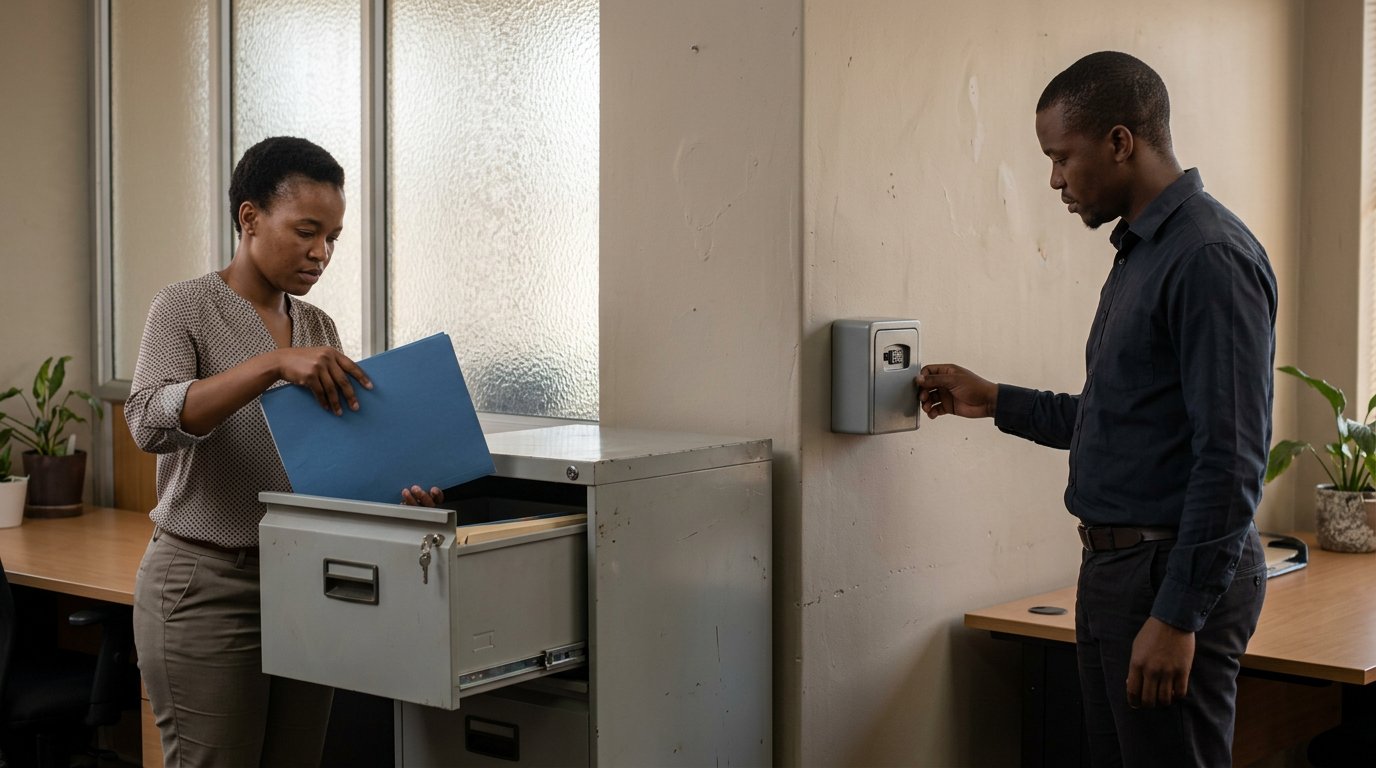
Confidential virtual assistant support should be assessed by more than a polished profile. Prioritise relevant administrative experience, clear confidentiality agreements, separate logins, access limited to necessary accounts and active oversight. Set boundaries for sensitive information from the outset, then review access and working practices as the relationship develops.
Executive support can involve sensitive correspondence, calendars and business records, so it’s reasonable to expect discretion to be built into the working arrangement rather than left to assumption. This article explains how to compare assistant vetting and management oversight, employment models, subscription arrangements and providers for confidential executive support. You’ll also learn how practical access controls and clear working expectations can help protect privacy while delegated work moves forward steadily.
Key Takeaways
- Prioritise relevant administrative experience, written confidentiality expectations and ongoing oversight when assessing an assistant.
- Use separate logins and limit access to the accounts and files needed for the work, keeping backups apart from shared working folders.
- Compare direct employment and subscription arrangements by considering how each handles oversight, continuity, workload and access to sensitive information.
- Choose executive support that fits your working arrangements, communication needs and privacy boundaries, then agree those expectations from the start.
Assistant vetting and management oversight
Assess candidates against the work they will handle. Prior experience as a virtual assistant or in a similar administrative role is a practical starting point. For example, someone managing executive scheduling should understand calendar coordination and professional communication. During the first few months, review work and access regularly, then adjust oversight as responsibilities become clearer.
For work involving personal information in South Africa, include POPIA in your privacy review. Document what information the assistant may handle, the purpose for using it and any limits on sharing it.
A virtual assistant can sign a non-disclosure agreement and a confidentiality agreement. Specify the information covered, the purpose of the work and restrictions on sharing it with third parties.
Offshore arrangements can bring practical challenges, including time-zone differences, unfamiliar working practices and questions about where information is accessed. Set clear communication expectations and limit access to the information needed for assigned tasks.
| Arrangement | Vetting and oversight | Access considerations |
|---|---|---|
| Direct placement | You manage selection and supervision. | Review permissions as duties change. |
| Managed staffing | Clarify who coordinates and oversees work. | Establish responsibility for access changes. |
| Managed assistant pod | Define task ownership across the team. | Give each assistant access for assigned tasks. |
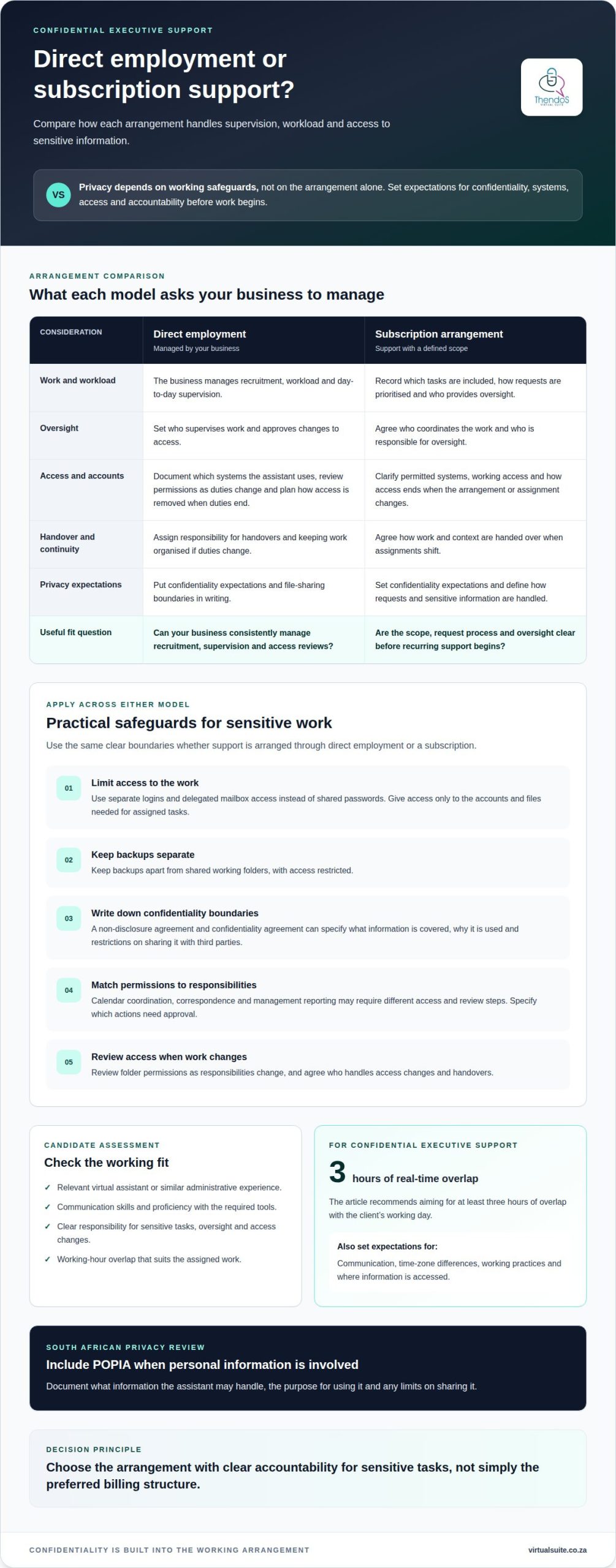
Choose support according to task complexity and the oversight you can provide. For confidential executive support, aim for at least three hours of real-time overlap with the client’s working day.
Use delegated mailbox access and separate logins rather than shared passwords to maintain an audit trail. Limit access to work accounts, keep backups separate and restricted, and review folder permissions when responsibilities change.
Assistant employment and subscription models
With direct employment, the business manages recruitment, workload and day-to-day supervision. This can create a consistent working relationship, but the business must also manage access reviews and handovers. Document which systems the assistant uses, who approves access changes and how permissions are removed when duties end.
A subscription arrangement usually sets out recurring support and its scope. Before work begins, record which tasks are included, how requests are prioritised and who provides oversight. If the assistant manages an executive’s calendar, specify which appointments they can view and which changes need approval.
Neither arrangement protects privacy by itself. Document the rules that apply across employment or subscription agreements, including permitted systems, file-sharing boundaries, confidentiality expectations and how to report an information concern. Keep the agreement aligned with the actual duties: scheduling requires different access from preparing management reports.
- Direct employment: define supervision, account ownership, access reviews and handover responsibilities.
- Subscription: clarify task scope, request channels, oversight and how working access ends.
- Either model: record confidentiality expectations and limit access to work requirements.
Choose the arrangement that gives you a clear line of accountability for sensitive tasks, not simply a preferred billing structure. If recurring administration needs a defined working arrangement, virtual assistant support can help keep delegated tasks organised.
Virtual assistant providers for confidential executive support
Confidentiality depends on working safeguards, not simply on whether support comes from an individual or an agency. Apply the same standards to either arrangement: clarify who handles sensitive tasks, who is accountable for access and how information is managed when assignments change. For example, specify who receives an executive’s correspondence and who may respond on their behalf.
Virtual assistant support in South Africa can cover executive administration such as scheduling, communication and reporting. Match the role to the workload: diary management calls for strong scheduling habits, while reporting requires careful handling of business information and clear review steps.
To find support in South Africa, define the tasks and working arrangements first. Then assess relevant administrative experience, communication skills, tool proficiency and working-hour overlap. For confidential executive support, at least three hours of real-time overlap with the client’s working day is recommended.
Use these criteria to assess a provider’s fit:
- Task scope: identify the responsibilities and information involved.
- Accountability: establish who oversees assignments and handles changes.
- Continuity: agree how work and context are handed over when assignments shift.
For example, an executive who delegates correspondence can define which messages may receive a routine reply and which require approval. The most suitable arrangement is the one that makes responsibilities and decision boundaries clear. To organise delegated work around defined responsibilities, explore structured operational support.
An individual assistant or an agency can provide confidential executive support; the arrangement alone does not determine confidentiality. Compare options by who handles sensitive tasks, oversees access and assignments, and maintains continuity when work changes.
Thendo’s Virtual Suite: Virtual assistant support
Thendo’s Virtual Suite provides virtual assistant support for founders and professionals who need help managing delegated work. If scheduling, follow-ups or routine administration are taking attention away from executive priorities, support can be organised around clearly defined responsibilities and working boundaries.
For sensitive tasks, agree what information is needed, which actions require approval and how updates should be shared before work begins. Executive & Administrative Support can help with scheduling and correspondence, while Project Coordination brings task ownership and timelines into a clearer structure. Structured operational support can also help manage recurring workflows.
Share the tasks you want to delegate and the boundaries that matter to your work. Contact Thendo’s Virtual Suite to discuss suitable support.
Make privacy part of your working rhythm
Delegation works best when privacy expectations are part of everyday operations, not just a document reviewed at the outset. As responsibilities shift, revisit what information the assistant needs and how new tasks fit your boundaries. This keeps confidential virtual assistant support aligned with the way your business works.
Thendo’s Virtual Suite can bring delegated administration into a clearer structure through virtual assistant support, structured operational support and CRM management. Start by identifying the tasks taking up executive attention and the working boundaries those tasks require.
Contact Thendo’s Virtual Suite to discuss support for your operations. A considered approach can make room for focused leadership and more orderly work.
Frequently Asked Questions
What selection criteria matter most for confidential executive support?
Choose support that fits the executive’s communication style and decision-making pace. Consider whether the assistant can maintain a professional tone in external correspondence, organise shifting priorities and keep work moving without unnecessary interruptions. An executive who travels frequently, for example, may value well-organised scheduling updates, while another may need careful coordination of meeting preparation and follow-ups.
How do South African virtual assistants protect client data and privacy?
Agree how information is handled throughout its working lifecycle. Decide where completed files are stored, how long working copies are kept and what happens to them when a task ends. A reporting workflow, for example, could specify where the final report belongs and who removes temporary working documents after approval.
How much do confidential virtual assistant services cost in South Africa?
The price depends on the case and is given after a quote request. Relevant factors include the tasks involved, expected workload, level of support and working arrangement. Occasional diary coordination differs from ongoing executive administration involving correspondence, reporting and project follow-ups. Defining responsibilities helps establish the scope of the support needed.
How can I vet a virtual assistant for trustworthiness and data security?
Look for consistency between a candidate’s work history, references and professional communication. Ask a referee about reliability, discretion and how the assistant handled changing priorities. A structured conversation can also show whether they communicate limitations promptly and document completed work clearly. These details offer useful context beyond a polished CV or confident interview.
What secure tools should virtual assistants use for email, file sharing, passwords and video calls?
Use organisation-managed accounts and approved platforms, rather than personal email or file-sharing accounts. Google Workspace and Microsoft 365 can support business email and document collaboration. Choose a video-call platform with meeting controls suited to the discussion, and agree whether calls may be recorded. Keep client work in its designated business workspace instead of scattering copies across tools.

Article by
Thendo Sadiki
CEO of Virtual Suite