

The best support for a founder often takes recurring work off their plate so they can focus on leading. A virtual assistant for founders can help with calendar management, follow-ups, project coordination and day-to-day business administration. The right support is shaped around what needs attention and which tasks can be delegated clearly.
It makes sense to want flexible support without adding another layer of complexity. Yet platforms differ in how they organise tasks and support ongoing work, so the best fit depends on a founder’s priorities and preferred way of working. This article explains what a virtual assistant does, how founder admin can accumulate, and how to compare platform models for startup support. You’ll have a clearer basis for deciding whether support could protect time for leadership, and which features matter most for a South African or international business.
Key Takeaways
- Spot how inbox, calendar and routine admin can draw attention away from leadership priorities.
- Identify which administrative and operational tasks could be delegated with clear instructions.
- Compare platform options by the type of support, task fit and continuity they provide.
- Use your priorities and working style to decide what kind of startup support could bring more structure to your week.
What Does a Startup Founder Actually Lose to Admin Every Week?
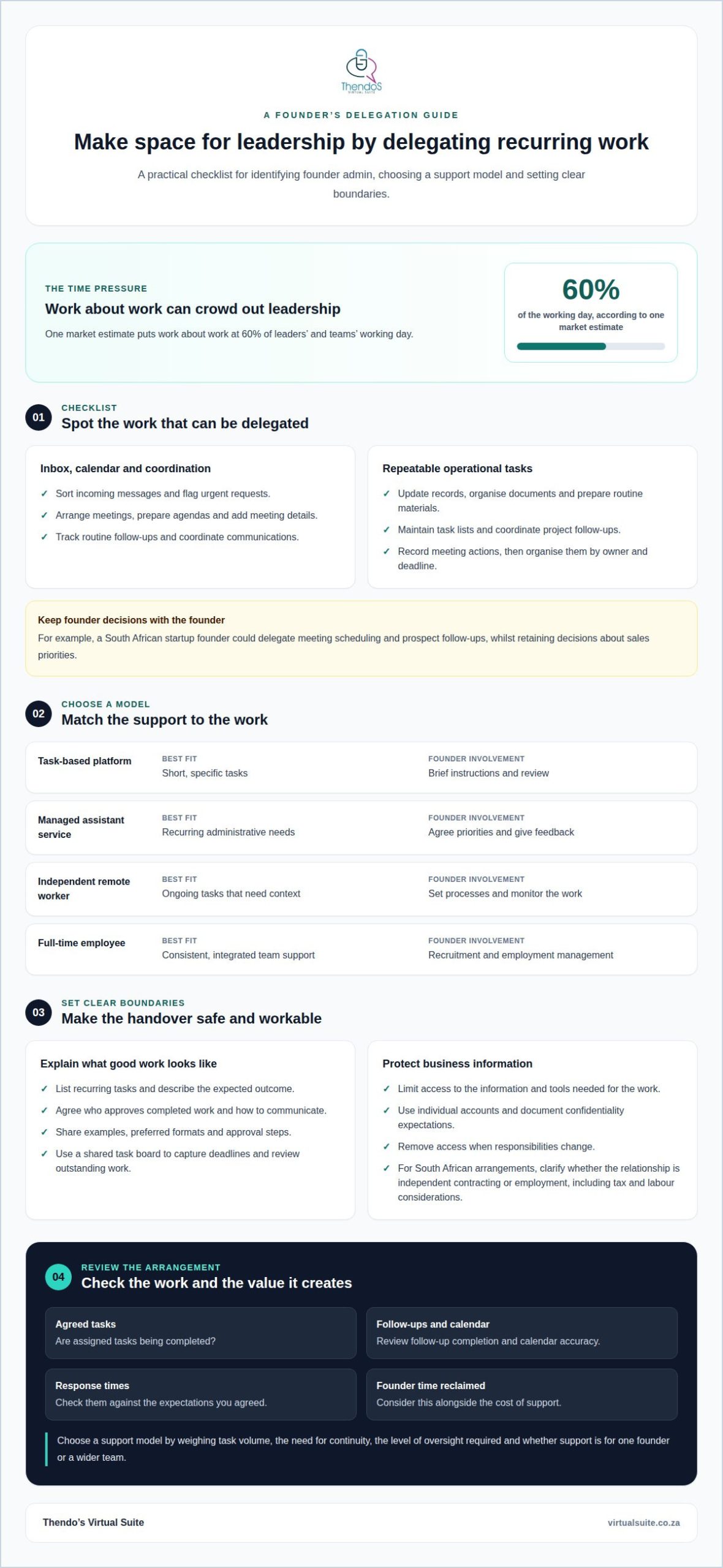
Inbox management, scheduling and routine coordination can consume time meant for decisions, customers and growth. One market estimate puts work about work at 60% of leaders’ and teams’ working day.
Inbox, calendar and administrative support
A remote assistant can sort incoming messages, flag urgent requests, arrange meetings and prepare agendas. They can also track follow-ups, organise documents and coordinate routine communications. This support focuses on the founder’s daily flow, rather than broader staffing or specialist marketing. For example, a South African startup founder could delegate meeting scheduling and prospect follow-ups, while retaining decisions about sales priorities.
Dedicated versus shared assistant support
A dedicated assistant can build familiarity with a founder’s preferences and recurring workflows. Shared support can suit well-defined tasks that need less continuity, while a managed service may organise task allocation and oversight. For marketing and communications, clarify whether the work involves content scheduling, coordination or drafting, and who approves material before it is published.
Support needs change as a business grows. Early-stage founders may prioritise inbox management, calendar coordination and administration. As the team expands, meeting coordination and project follow-ups may become more important. Established leadership teams may need consistent support across executives and departments.
| Option | Continuity | Best suited to |
|---|---|---|
| Freelance assistant | Direct working relationship | Defined tasks |
| Agency or managed service | Organised service delivery | Coordinated support |
| Full-time assistant | In-house availability | Ongoing team needs |
In South Africa, clarify whether an arrangement is independent contracting or employment, as this affects tax and labour considerations. Also agree how business and client information will be accessed, used and protected.
Assess performance against agreed tasks, such as completed follow-ups, calendar accuracy, response times and founder time reclaimed. Review these measures alongside the cost of support to evaluate its value.
Choose a support model by weighing task volume, the need for continuity, the level of oversight required and whether support is for one founder or a wider team.
What is a Virtual Assistant?
A virtual assistant for founders is a remote professional who handles agreed administrative or operational work. Typical tasks include organising a calendar, preparing meeting notes and tracking routine follow-ups.
Administrative and operational delegation
Delegation can cover recurring work that follows a clear process, such as updating records, preparing documents, coordinating appointments and monitoring task lists. For example, an assistant can record action items after a planning meeting, then organise them by owner and deadline. This differs from executive support because it centres on repeatable workflows, rather than the founder’s broader daily priorities.
Executive assistant tasks
An executive assistant provides closer support with scheduling, meeting preparation, travel arrangements and confidential correspondence. Entrepreneurs may value this focus when their commitments involve several stakeholders or frequent changes. A trained assistant can learn preferred formats and approval steps, while consistent check-ins help maintain alignment. Hiring should begin with a clear role, defined access and agreed communication routines.
To delegate founder administration, list recurring tasks, describe the expected outcome and agree who approves completed work. Calendar management, for instance, can include protecting preparation time and adding meeting details, while the founder retains control of priorities and decisions.
Sharing business information carries risks, including unauthorised access, accidental disclosure and outdated permissions. Limit access to the information and tools needed for the work, use individual accounts, document confidentiality expectations and remove access when responsibilities change.
Clear task boundaries help entrepreneurs preserve oversight without handling every detail. Consider structured administrative support when recurring tasks need dependable coordination.
Virtual assistant platforms for founders and startups
For a South African startup, the right support depends on task complexity, continuity and how much oversight the founder can provide. Compare how the work will be handled, not just how a service is described.
| Option | Support model | Best fit | Founder involvement |
|---|---|---|---|
| Task-based platform | Defined assignments | Short, specific tasks | Brief instructions and review |
| Managed assistant service | Coordinated support | Recurring administrative needs | Agree priorities and feedback |
| Independent remote worker | Direct working relationship | Ongoing tasks needing context | Set processes and monitor work |
| Full-time employee | In-house role | Consistent, integrated team support | Recruitment and employment management |
South African founders can find candidates through professional networks, referrals, online talent platforms or managed services. For each route, define the work before hiring: list recurring tasks, required skills, access needs and approval points. A startup seeking help with meeting preparation needs a different arrangement from one coordinating project management and employee updates.
During onboarding, provide examples of finished work, explain communication preferences and agree how tasks will be tracked. For instance, a shared task board can capture deadlines, with a regular review for outstanding work. This helps assess consistency, productivity and fit without mistaking completed activity for business impact.
Keep leadership decisions, sensitive approvals and core client relationships under your control, while delegating repeatable coordination. Choose an arrangement that balances the need for continuity with the time available for training and oversight.
For support that brings calendar tasks and day-to-day coordination into a clearer routine, explore virtual assistant support.
Thendo’s Virtual Suite: Virtual assistant support
Thendo’s Virtual Suite supports founders who need help with recurring administration alongside leadership responsibilities. Executive & Administrative Support can help manage day-to-day tasks, while Project Coordination and Business Tools & Systems Support help organise work and workflows.
For example, Executive & Administrative Support can help organise scheduling, while Project Coordination can track tasks and timelines. Customer Support can assist with client enquiries and follow-ups, and Finance & Administrative Support can help with invoicing, expense tracking and records. Choose a focus based on where work is getting stuck and what you are ready to delegate.
If your workload is making it harder to focus on leading, book a consultation with Thendo’s Virtual Suite to discuss your support needs.
Choose one operational change to make next
Start with a responsibility that regularly interrupts your leadership work. Define what a good handover looks like, which decisions should remain yours and how you will review progress. This makes choosing a virtual assistant for founders a practical decision based on your priorities, rather than a general promise of more time.
Thendo’s Virtual Suite offers virtual assistant support and structured operational support for founders who want dependable help with day-to-day work. CRM management can also support clearer organisation of lead and client information. The right starting point is the area where consistent support would make your working routine easier to manage.
Contact Thendo’s Virtual Suite to discuss the support that fits your current priorities. A considered first step can help you lead with greater focus.
Frequently Asked Questions
Does a CEO Need an Executive Assistant?
A CEO may benefit from Executive & Administrative Support when coordination and administration compete with leadership responsibilities. The need depends on the demands of the role, not the title alone. For example, a founder managing investor correspondence, internal meetings and client commitments may need scheduling and communication support. A smaller, well-defined workload may call for narrower administrative assistance.
How Does It Work?
Support begins with identifying business needs and agreeing a suitable plan. Thendo’s Virtual Suite follows a structured process: Discovery, Support Plan, Onboarding, Offload Core Tasks, Ongoing Support and Scale With Confidence. For example, a founder might document how client enquiries are handled, then hand over agreed follow-up and record-keeping tasks through an organised workflow.
Should I Hire On-Shore Or Off-Shore?
Choose based on communication needs, task requirements and how closely the support must align with your working day. For a South African business serving local clients, shared working hours may make live coordination easier. For work that can be completed asynchronously, clear written instructions and agreed handover times can matter more than location. Assess the arrangement around the actual work.
What Does a Managed EA Service Actually Cost a Startup Founder?
The cost depends on the scope of support, the tasks involved and the level of ongoing coordination required. Set out the responsibilities, expected working pattern and approval boundaries before requesting a quote. This helps establish a relevant fee for the arrangement rather than relying on a general estimate. Thendo’s Virtual Suite provides pricing after a quote request.
Which tasks can founders delegate to a virtual assistant?
Founders can delegate recurring work when instructions and approval boundaries are clear. Examples include preparing documents, arranging appointments, coordinating client enquiries, updating CRM records, tracking project actions and organising expense information. Retain decisions that require your authority, such as setting business priorities or approving sensitive communications. A written handover can clarify what the assistant completes and what needs your review.

Article by
Thendo Sadiki
CEO of Virtual Suite