

What changes when routine work no longer competes with the decisions only you can make? Working with a virtual assistant means delegating defined tasks to a remote professional who can provide administrative, customer, creative or operational support. This may include managing emails and appointments, organising information, supporting clients and keeping day-to-day business activity moving.
It’s understandable to want reliable help without losing oversight of your work. A clear brief, well-matched support and regular communication help make the arrangement productive. This guide explains what a virtual assistant does, how to choose the right support and which skills matter. It also explores how founders, consultants and growing businesses use virtual assistance to create more room for focused work.
Key Takeaways
- Distinguish routine administrative tasks from specialised responsibilities so support is matched to the work that needs attention.
- Choose services around your business priorities, and look for communication, organisation and digital-tool skills that fit those tasks.
- Understand how delegating recurring work can give business owners more room for focused responsibilities.
- See how virtual assistant support, structured operational support, CRM management and project management can help bring greater order to business activity.
What is a virtual assistant job?
A virtual assistant provides remote administrative, customer, creative or operational support, with responsibilities shaped by a business’s needs. The role may cover recurring tasks or a defined project, such as organising client records.
Administrative and specialist responsibilities
Administrative work can include email management, calendar scheduling, data entry and customer service. Specialist support may involve social media, research or technical tasks. The distinction matters because each type of work needs different experience and instructions: routine enquiry replies need clear response guidance, while social media content calls for an agreed style and approval process.
Administrative project work
A virtual assistant may coordinate a project such as updating a contact database, preparing onboarding documents or arranging appointments. A written brief can set out the desired outcome, deadlines, access permissions and approval points, helping the assistant manage connected tasks without losing sight of the end goal.
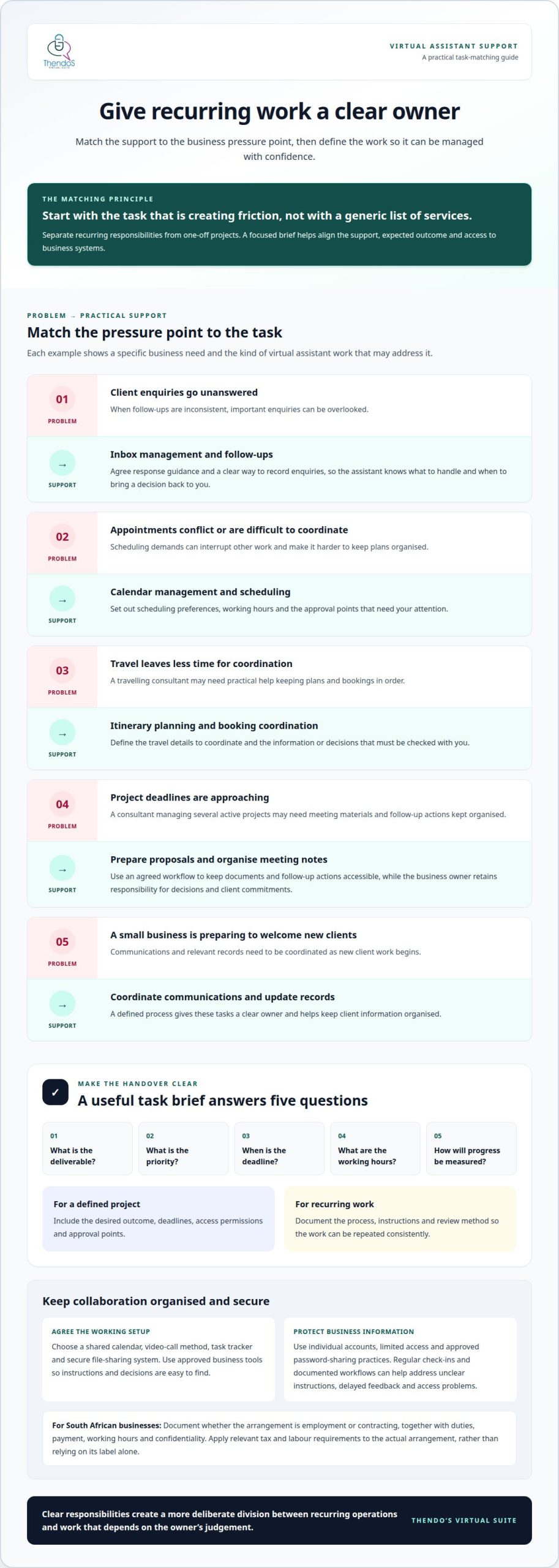
For collaboration, agree on a shared calendar, video-call method, task tracker and secure file-sharing system. Use approved business tools so instructions and decisions are easy to find.
In South Africa, document whether the arrangement is employment or contracting, along with duties, payment, working hours and confidentiality. Apply the relevant tax and labour requirements to the actual arrangement, rather than relying on its label alone.
Remote onboarding can combine a written task guide, demonstrations and supervised practice. For example, the assistant can observe how a client enquiry is recorded, then complete a sample entry for review.
Set expectations in a task brief: define the deliverable, priority, deadline, working hours and how progress will be measured. A scheduling task, for example, can be assessed for accuracy and completion by the agreed deadline.
Protect confidential information with individual accounts, limited access and approved password-sharing practices. Unclear instructions, delayed feedback and access problems can all create difficulties. Documented workflows and regular check-ins help address them.
Choosing virtual assistant services and the skills to look for
Choose support by matching tasks to a clear business need. If client enquiries go unanswered, prioritise inbox management and follow-ups; if appointments conflict, calendar management and scheduling may help. For a consultant who travels, itinerary planning and booking coordination may be more useful than social media support.
Separate recurring responsibilities from one-off projects before defining the role. A growing business might need ongoing data organisation, while a product launch may call for temporary research and document preparation. A focused brief aligns the support, expected outcomes and access to business systems. If you’re weighing task delivery against improving the workflows behind it, this guide to virtual assistant vs operational support can help clarify which kind of support fits.
- Communication: clear updates, careful listening and professional client correspondence.
- Organisation: accurate records, prioritised tasks and reliable deadline tracking.
- Digital confidence: practical familiarity with calendars, spreadsheets and shared work platforms.
These skills support productivity, but specialist duties need relevant experience too. For example, social media assistance calls for sound writing and content-planning skills. A portfolio with sample email templates or a social media calendar can show how an assistant approaches real tasks.
Look for evidence that matches your work, not simply a long list of abilities. LinkedIn profiles, work samples and relevant courses can help you understand an assistant’s experience. Discuss how they handle feedback, shifting priorities and confidential client information, using a realistic example from your business.
For a South African small business, a suitable support need might be organising appointment requests and maintaining accurate client records. A well-defined scope makes it easier to delegate confidently and assess whether the support addresses the actual pressure point.
For tailored virtual assistant support, align the tasks with the responsibilities that need consistent attention.
Reasons businesses hire virtual assistants
Businesses often seek remote support when important decisions compete with repeatable tasks. A virtual assistant can maintain enquiry records, prepare meeting materials and organise follow-up actions, giving the business owner more room to consider client needs. Working with a virtual assistant is most useful when responsibilities are clearly defined and linked to an operational priority.
Support can also help maintain continuity during demanding periods. A consultant managing several active projects, for example, may need proposals prepared and meeting notes organised as deadlines approach. Assigning these tasks through an agreed workflow keeps information accessible and helps prevent essential details from being overlooked.
Some businesses need capacity for a particular opportunity, rather than ongoing help across every function. A small firm preparing to welcome new clients might need support coordinating communications and updating relevant records. Working with a virtual assistant gives those tasks a clear owner, while the business retains responsibility for decisions and client commitments.
Remote support can be valuable for work suited to digital collaboration, such as research, document preparation or routine writing. A clear brief, access to the right information and a defined review process help the assistant produce work that meets the business’s standards.
The benefit is not simply removing tasks from a list. It is creating a more deliberate division of attention between recurring operations and work that depends on the owner’s judgement. If you’re considering where support could make a practical difference, discuss your virtual support needs.
Thendo’s Virtual Suite: Virtual assistant support
Thendo’s Virtual Suite provides virtual assistant support for growing businesses for founders and professionals who need dependable help with recurring business responsibilities. This can be useful when administration takes attention away from client work or when follow-ups and task coordination need more consistent oversight.
For broader operational needs, structured operational support can help organise workflows around your business. CRM Management can support clear lead and client records, while Project Management helps keep responsibilities, deadlines and progress visible. The right focus depends on where work is becoming difficult to manage, whether that means scattered client information or competing project tasks.
Share the responsibilities that need attention and the outcomes you want to achieve. Thendo’s Virtual Suite can discuss how its virtual assistant support fits your needs. Contact Thendo’s Virtual Suite to start a conversation.
Choose support that can grow with your business
As your business changes, the responsibilities needing attention may shift too. Treat working with a virtual assistant as an evolving arrangement: review whether the agreed priorities still reflect your workload, client commitments and growth plans. This keeps support aligned with the business’s direction instead of fixed around an outdated task list.
A useful next step is to identify the work you want to make room for, then consider which recurring responsibilities currently limit that focus. This gives future discussions a clear purpose and helps you recognise when priorities change.
When you’re ready to explore what that could look like, get in touch with Thendo’s Virtual Suite. A considered conversation can help you decide on a practical way forward.
Frequently Asked Questions
What tasks can a virtual assistant help with?
A virtual assistant can support business and personal administration, depending on the agreed scope. For example, a founder preparing for a client event might delegate travel planning, appointment coordination and document preparation. Other tasks can include expense reporting, CRM updates and follow-up messages. Group related responsibilities so instructions, access and approval are clear.
How do you find and hire a virtual assistant in South Africa?
Start by identifying the work that needs support, then discuss it during a consultation. Thendo’s Virtual Suite begins with Discovery, followed by a Support Plan and Onboarding. The process then moves to Offload Core Tasks, Ongoing Support and Scale With Confidence. This creates a structured way to discuss needs and organise assistance.
What skills and experience should you look for in a virtual assistant?
Look for evidence that relates directly to your workflows and tools. If CRM updates are a priority, discuss how the assistant handles records and follow-ups using a system such as HubSpot. For shared documents or scheduling, familiarity with Microsoft 365, Google Workspace or scheduling platforms may be relevant. A clear example of previous work can help you assess fit.
Should you hire a freelance virtual assistant or use an agency?
Choose an arrangement that suits your communication preferences and how responsibilities will be managed. Consider who will handle the work, who your main contact will be, and how instructions or changes will be managed. Before agreeing, define the tasks, access requirements, review process and continuity arrangements in writing. These details matter more than the label attached to the arrangement.
What South African tax, contract, and labour rules apply when hiring a virtual assistant?
Document whether the arrangement is employment or contracting, along with duties, payment, working hours and confidentiality. Apply the relevant South African tax and labour requirements to the actual arrangement, not just its label.

Article by
Thendo Sadiki
CEO of Virtual Suite