

An enquiry arrives while you’re delivering client work, a follow-up slips, and the details you need are scattered across emails and spreadsheets. Reliable operational support is more than an extra pair of hands. It brings clear task ownership, consistent communication and workflows shaped around how your business operates.
If recurring administration is competing with client work and leadership priorities, dependable support can help you bring daily tasks into better order. This guide explains what to look for, how to identify where support could make a difference, and how a structured approach can clarify everyday work. You’ll also see how Thendo’s Virtual Suite’s six-step support process moves from discovery and planning to ongoing support that can adapt as needs change. From lead follow-up and client onboarding to organised project work, the aim is to create more consistent workflows and give you more room for the work only you can do.
Key Takeaways
- Look for clear task ownership, timely follow-up and accurate records when assessing reliable operational support.
- Map recurring bottlenecks and client-facing tasks to identify where support could ease pressure on your business.
- Consider how support will fit your existing tools, communication habits and priorities.
- Thendo’s Virtual Suite follows six steps, from Discovery to Scale With Confidence, with services such as Project Coordination and Customer Support aligned to your needs.
What reliable operational support looks like in a growing business
Reliable operational support keeps recurring business work organised, responsive and consistent. It makes clear who owns each task, what needs to happen next and where important information is recorded. Work can then move forward without relying on someone’s memory or a search through email threads.
Reliability often shows up in small, repeatable actions: enquiries are acknowledged, follow-ups have an owner, and client details are recorded accurately. These habits reflect the principles of operations management, which include designing and improving the processes used to deliver goods and services.
Consider a South African small business consultant who receives an enquiry by email. A clear workflow records the prospective client’s details, assigns responsibility for replying and notes the agreed next step. If a proposal is sent, its status and follow-up date are recorded in the same place. When the business owner is busy with client work, the next action remains visible rather than disappearing in an inbox or being passed along without context.
How reliable support shows up in everyday operations
Clear workflows reduce the need to remember every outstanding task. They set out what information to capture, who is responsible and how to record progress. This gives the owner and anyone supporting the process a shared reference point, making handovers less dependent on informal messages.
Consistent communication also shapes the customer experience. A prospective client receives a considered response and knows what happens next, while existing clients are less likely to need to repeat information. Reliable operational support connects these everyday details, helping the business provide a more consistent experience as it grows.
How to assess reliable operational support for your business
Start with the work that repeatedly slows the business down. Note which tasks are delayed, which client-facing responsibilities need regular attention, and which processes only one person knows how to complete. This review can help you distinguish a short-term busy period from a recurring operational gap.
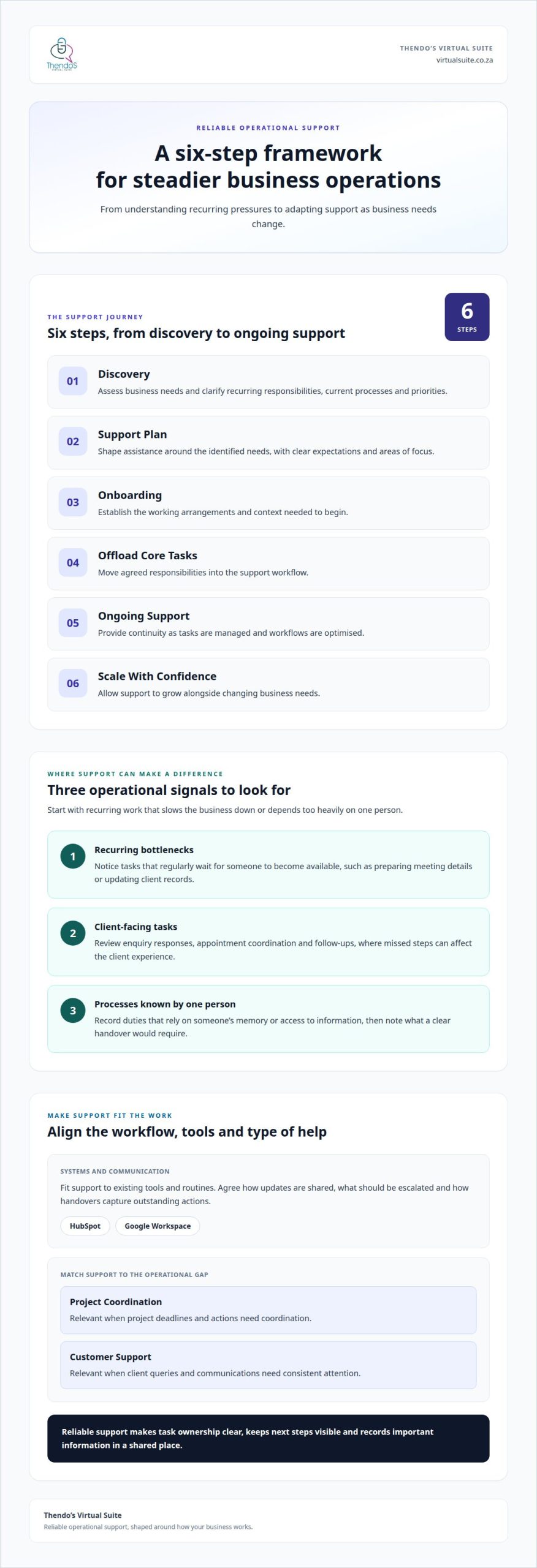
- Recurring bottlenecks: Identify work that regularly waits for someone to become available, such as preparing meeting details or updating client records.
- Client-facing tasks: Review enquiry responses, appointment coordination and follow-ups, where missed steps can affect the client experience.
- Processes known by one person: Record duties that depend on someone’s memory or access to information, then note what a clear handover would require.
Next, consider how support would fit your existing tools, communication habits and priorities. The SBA’s business management guide offers an overview of day-to-day business management, although it is written for a United States audience. For a South African business, the practical question still applies: what needs to be organised so daily work can proceed with clarity?
What to look for in systems, communication and flexibility
Support should fit the tools and routines your business already uses, rather than adding unnecessary complexity. Business Tools & Systems Support can help organise work using tools such as HubSpot and Google Workspace. Agree how updates will be shared, what should be escalated, and how handovers will capture outstanding actions. Discretion is important when handling business and client information, while responsiveness and adaptability help when priorities shift.
Before deciding what support would be useful, describe a typical week and identify where tasks stall. Then consider whether the support addresses those specific needs and can adapt as they change. If systems and workflows are part of the gap, explore Business Tools & Systems Support from Thendo’s Virtual Suite.
How Thendo’s Virtual Suite structures reliable operational support
Support works best when it starts with the pressures your business is actually facing. Thendo’s Virtual Suite uses a structured process to understand those needs, agree priorities and shape assistance around work that can change over time. This gives reliable operational support a practical foundation instead of treating tasks as isolated requests.
What happens when you begin a support relationship
A free consultation is an opportunity to discuss your business challenges and support requirements. The first step is Discovery, which assesses your needs and clarifies recurring responsibilities, current processes and priorities. Next, the Support Plan sets out how assistance will be shaped around those needs, so expectations and areas of focus are clear.
From there, Onboarding establishes the working arrangements and context needed to begin. During Offload Core Tasks, agreed responsibilities move into the support workflow. Ongoing Support provides continuity as tasks are managed and workflows are optimised. Finally, Scale With Confidence allows support to grow alongside changing business needs.
The work is matched to the operational gap. If project deadlines and actions need coordination, Project Coordination may be relevant. If client queries and communications need consistent attention, Customer Support may be a better fit. Clear priorities help keep support focused on what matters most to your business.
For a practical picture of how assistance can fit into everyday work, explore this guide to virtual assistant support for daily operations. If you’re ready to discuss the operational pressures you want to address, arrange a consultation with Thendo’s Virtual Suite.
Make space for steadier business operations
As your business changes, the right support can help you protect time for client delivery and leadership without letting essential work drift. Reliable operational support should feel like a considered extension of your business, grounded in trust, discretion and a clear understanding of what matters.
A client testimonial describes Thendo as discreet, reliable and trustworthy. Thendo’s Virtual Suite has also supported communications, media interviews, invitations and a marketing campaign for a major theatre production launch. Every business has different priorities, so a useful next step is to discuss the operational pressures you want to address and the kind of support that would help.
Book a consultation with Thendo’s Virtual Suite to take a thoughtful first step towards more organised, adaptable ways of working. Your next stage of growth can begin with greater clarity.
Frequently Asked Questions
Can operational support help a small business improve client follow-up?
Yes. Customer Support can include client communication, enquiries, follow-ups, inbox handling and relationship management. For example, a South African design studio could have support responding to a prospective client’s project enquiry and continuing the exchange when they return with further details. Keeping the relevant conversation context together can make the interaction feel considered, without promising a particular result.
Is reliable operational support only for large businesses?
No. Thendo’s Virtual Suite supports founders, consultants, creatives, service-based businesses and growing teams of different sizes. A solo consultant, for instance, may need help coordinating appointments, while a small creative team may need help keeping shared project activity in view. Operational support can be useful well before a business has a large internal department.
Can operational support include personal tasks as well as business administration?
Yes. Personal Assistance can include travel planning, appointments, errands and lifestyle coordination, alongside business tasks such as scheduling and day-to-day administration. A busy professional might, for example, need help arranging travel and keeping appointments in order during a demanding period. The appropriate mix depends on the client’s priorities and Support Plan, so assistance can reflect both work and personal commitments.

Article by
Thendo Sadiki
CEO of Virtual Suite