

Good customer support depends on more than the people answering queries. Operational support is the behind-the-scenes work that helps a business respond to clients, resolve issues and keep processes running smoothly. Knowing how to get operational support starts with identifying who should manage these responsibilities and putting clear processes, tools and communication in place.
It can be difficult to tell whether a challenge needs a dedicated support team, clearer procedures or better-organised systems. This article explains what support operations include, who typically handles the work and how it can be managed effectively. You’ll also see how South African businesses can use documented processes, appropriate tools and regular reviews to create steadier, more dependable support.
Key Takeaways
- Spot when recurring issues, delayed replies or unclear ownership suggest that customer-facing staff need stronger operational support.
- Understand how responsibilities can span client queries, technical troubleshooting, staff guidance and keeping services running smoothly.
- See how documented procedures, suitable tools, clear escalation routes and regular feedback help support operations stay organised.
- Learn when structured operational support, CRM management or project management can help bring greater clarity to day-to-day work.
What are support operations?
Operational support brings together the processes, tools and coordination that help customer service run smoothly. A representative may answer a client’s question, while operational support organises query records and identifies recurring issues. This structure helps a team respond consistently and spot problems that need attention.
Signs that extra support is needed include unanswered queries, repeated troubleshooting, unclear responsibility for escalations and information scattered across emails. If several staff members explain the same setup process, for example, a shared procedure could make responses more consistent. Backlogs and rising stress also signal a need to review workload, processes and team morale.
A dedicated support team needs clear responsibilities, customer-service and technical skills, and procedures that are communicated and reviewed. Leave cover should specify who monitors queries, updates clients and directs urgent issues. This helps maintain continuity when a key person is away.
Business support services can add capacity without creating an in-house role, while hiring brings an employee into the organisation’s team. The right option depends on the workload, the skills required and how closely the work needs to connect with day-to-day operations.
For a South African small business, begin by listing the operational tasks causing delays, then decide which need internal ownership or outside assistance. Government support routes depend on the need, so identify whether the priority is skills, funding or help with business systems before looking for a relevant agency.
Before engaging a provider, clarify access to business information, decision-making authority, escalation routes and leave cover. Review these arrangements as workloads and priorities change, so support stays aligned with the business.
Operational support definition and responsibilities
Operational support is the practical work that helps an organisation’s services, systems and people function reliably. It connects customer service with the processes and tools needed to resolve issues. For example, if a client cannot access an online form, support may diagnose the fault, guide the user and record the cause. The aim is not just to restore access, but to help prevent the same problem recurring.
Responsibilities vary by business, but often include responding to client questions, troubleshooting software, helping staff use product features and maintaining systems after launch. An application administrator, for instance, may follow production guidelines to protect availability. A support specialist might help with installation or setup, then explain how a feature works. Maintenance also involves considering user feedback and technology changes when planning updates.
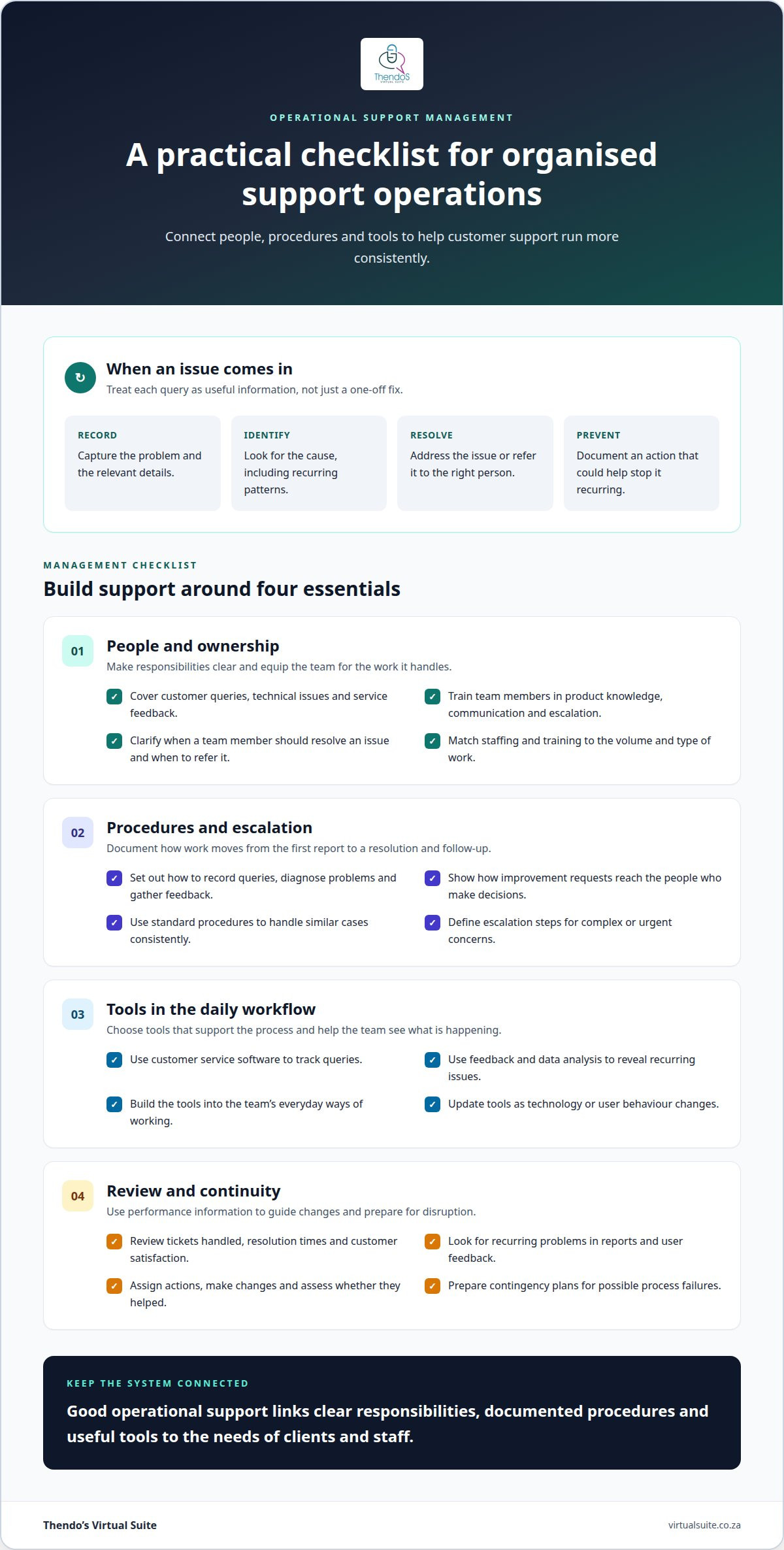
Good operational support treats each issue as useful information. A practical process is to record the problem, identify its cause, resolve it and document any preventive action. If several users struggle with the same booking step, the organisation could clarify the instructions or improve the form. This approach helps address recurring problems instead of relying on repeated fixes that take up staff time.
To understand whether support is working, review both activity and user experience. Teams can assess ticket volumes, resolution times and customer satisfaction alongside recurring issue types. These measures can show whether software and procedures help people do their work or create friction. Feedback can then guide practical changes, such as clearer guidance, revised maintenance tasks or a better-supported feature. The result is more consistent service informed by users’ needs.
Support operations management
Effective management connects people, procedures and tools to everyday support work. A support operations team needs the skills to handle customer queries, technical issues and service feedback. Training should cover product knowledge, communication and escalation, so each team member knows when to resolve an issue and when to refer it.
Document how the team records queries, diagnoses technical problems, gathers feedback and passes improvement requests to decision-makers. For example, a recurring login issue needs a clear route from its initial report through investigation, resolution and follow-up. Standard procedures help team members handle similar cases consistently, while escalation steps direct complex concerns to the right person.
Tools should support the process, not sit apart from it. Customer service software can track queries, while feedback and data analysis tools can reveal recurring issues. Build these tools into daily workflows and update them as technology or user behaviour changes. Staffing and training should also match the volume and type of work the team handles.
Management also needs a regular view of performance and risks. A report can bring together tickets handled, resolution times, customer satisfaction and recurring problems. Reviewing these findings helps determine how to get operational support that addresses actual needs. Assign actions, make changes and assess whether they helped. Contingency plans for possible process failures add another layer of continuity.
A consistent operational support planning approach can connect reports, assigned actions and contingency plans into a clear management cycle. Knowing how to get operational support means linking identified gaps with suitable responsibilities and processes.
In product management, support operations cover post-launch activities that help a product function and assist its users. This work can also include organising logistics for service teams, allowing representatives to focus on customers. Adequate staffing helps teams manage user queries and issues promptly. Identifying possible process failures and preparing contingencies can also reduce disruption.
Thendo’s Virtual Suite: Structured operational support
Thendo’s Virtual Suite provides structured operational support for businesses that need clear ownership of recurring work and dependable coordination. Support can be useful when administrative tasks compete with client delivery, lead follow-up is inconsistent or project responsibilities are difficult to track.
Support can be shaped around the work that needs attention. Virtual assistant support can help with ongoing administrative tasks, while CRM management can organise client and lead information. Project management can help keep work, responsibilities and deadlines visible. The aim is to fit support to your operational needs, rather than add complexity for its own sake.
If you’re ready to discuss where your business needs practical operational support, book a consultation with Thendo’s Virtual Suite.
Build support around your next stage
The right operating model can change as your business grows. Revisit the work that depends too heavily on you, then decide which responsibilities need ongoing ownership and which need occasional help. This gives you a practical basis for shaping support around your priorities, without adding processes your team may not need.
Deciding how to get operational support starts with matching the help you need to the source of pressure. Thendo’s Virtual Suite offers structured operational support, virtual assistant support and CRM management. These can address different needs, from recurring administrative tasks to a more organised way of managing business relationships.
Choose a next step that makes the work easier to manage and leaves room to adjust as priorities shift. If you’re ready to discuss a suitable approach, start a conversation with Thendo’s Virtual Suite. A considered plan can help you move forward with greater clarity.
Frequently Asked Questions
What does operational support include for a business?
Operational support can include coordinating everyday administration, client communication and project tasks. For example, a virtual assistant may organise an inbox, schedule appointments, prepare documents or record client follow-ups. Support can also keep CRM records current, making lead and client details easier for the team to find.
What steps should a business take to identify its operational support needs?
Start by listing recurring tasks that interrupt focused work, then note who handles each task and where delays occur. Group the work by skill, frequency and business impact. For example, if client enquiries are missed during project delivery, clarify who should monitor messages and record follow-ups. This helps reveal whether you need more administrative capacity, clearer task ownership or better coordination.

Article by
Thendo Sadiki
CEO of Virtual Suite