

The right operational support for founders depends on the responsibilities you need help with. A virtual assistant can handle defined tasks, while an Operations Manager typically oversees workflows and follow-through. Agree priorities and turnaround times clearly, so urgent work is handled promptly and routine decisions do not all return to you.
It is understandable to think that better organisation or longer hours will ease operational pressure. But if you are still assigning every task, chasing progress and resolving routine delays, the support may not match what your business needs.
This article explains how to set priorities and turnaround expectations, distinguish task-based assistance from operational ownership, and decide what to delegate. It also covers consistent email follow-ups and business systems, helping you protect your focus while keeping work moving.
Key Takeaways
- Match the support role to the responsibility you need covered: defined tasks call for different ownership from ongoing operational outcomes.
- Set priorities and turnaround expectations clearly, including what needs your approval and what can move forward independently.
- Delegate routine email follow-ups and repeatable systems work to reduce missed handovers and keep essential processes moving.
- Compare outsourced support, in-house staff and fractional leadership by the level of ownership, coordination and decision-making your business needs.
Differences between a Virtual Assistant and an Operations Manager
Early-stage founders face risks when key work depends on memory, one person or scattered messages. A missed client follow-up, an unclear handover or an overdue invoice can disrupt momentum. Reduce these risks by documenting recurring processes, assigning an owner and recording the next action in a shared system.
A virtual assistant usually handles defined tasks according to agreed instructions. For example, they might organise your calendar, prepare meeting notes or update lead records after a sales call. Set the desired outcome and approval limits, then clarify priorities so the assistant knows whether a client email or an internal update comes first.
An Operations Manager focuses on how work moves across the business. They may map a client’s journey from enquiry to onboarding, identify a handover gap and coordinate a revised process. Their remit can include assigning responsibilities, monitoring progress and resolving routine delays within agreed decision-making boundaries. You retain leadership judgement, while the operations role helps decisions reach the people and processes involved.
- Delegate a task when the steps and completion standard are already clear.
- Assign operational ownership when work crosses people or departments and needs coordination.
- Agree what requires founder approval, such as changing a client commitment or process.
Before delegating, record the priority, deadline, required result and escalation point. For example, a lead follow-up might take priority over tidying an internal file, with a clear instruction about when an unanswered prospect should be referred back to you. Review whether work progresses without repeated reminders. If you still chase updates or redo completed tasks, clarify authority, workflow and ownership before adding responsibilities.
Email, automation, and backend systems
Set up startup operations by mapping how an enquiry becomes a paying client. Record who owns each stage, the next action and the information required. For example, a consultant might log an enquiry, prepare a proposal, record the client’s decision and create the agreed onboarding tasks.
Email delegation works best with clear boundaries. Group messages by purpose, such as new enquiries, active client work and administration. Decide which replies can be sent independently, which need approval and when to flag an unanswered lead. This keeps follow-ups visible and approval responsibilities clear.
Automate a repeated step only once its process is clear. For instance, creating a new client record could prompt an onboarding task and a reminder to prepare a welcome email. Assign someone to review exceptions, such as missing details or a changed start date. Automation should support a useful process, not reproduce a confusing one.
Backend systems include the records and routines that help work move between people. A lead tracker can show contact details, enquiry status, last interaction and next action. A project board can make task owners and deadlines visible. Keep records current, and specify which system holds the authoritative version of each detail.
- Document repeatable email and administration tasks.
- Identify steps that follow consistent rules.
- Set approval boundaries and an escalation route.
- Review overdue follow-ups and exceptions regularly.
For help documenting workflows and coordinating recurring tasks, structured operational support can help establish clearer ownership and follow-through.
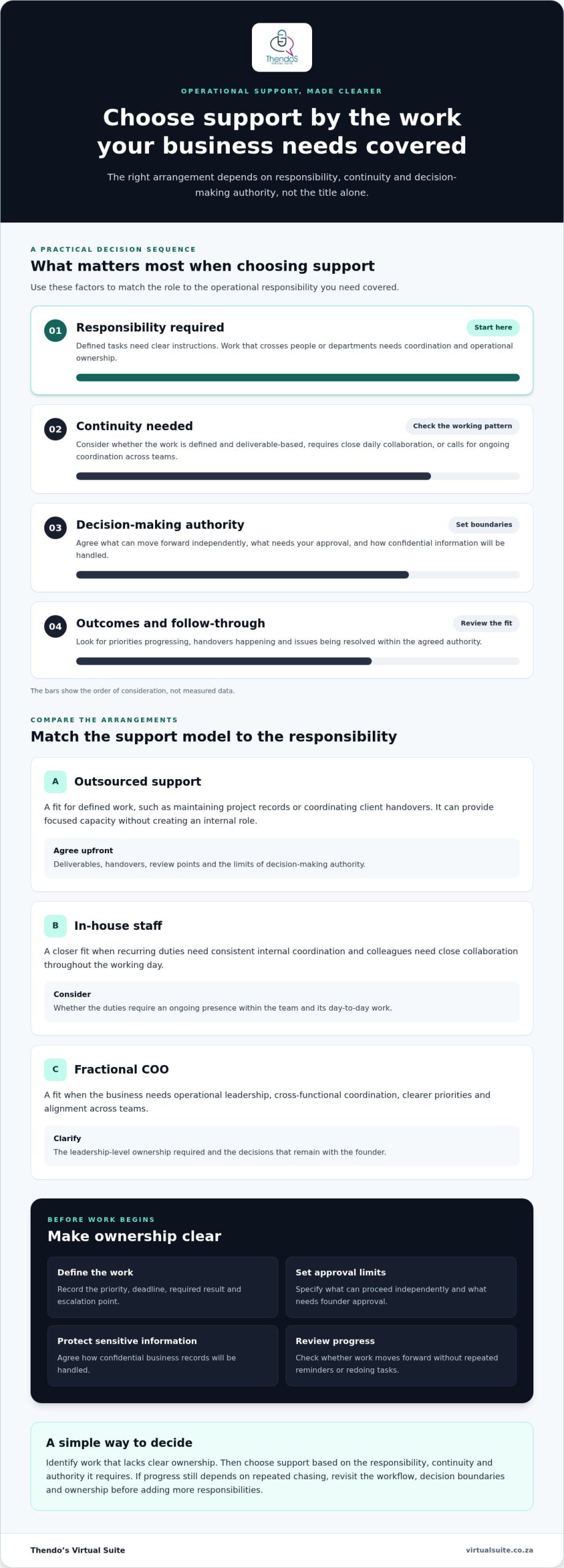
How can founders compare outsourced operations support, in-house staff and a fractional COO?
Compare each option by the responsibility, continuity and authority your business needs. Outsourced support can suit defined work, such as maintaining project records or coordinating client handovers. In-house staff may fit recurring duties that require close daily collaboration. A fractional COO focuses on operational leadership, cross-functional coordination and business priorities. Start by identifying work that currently lacks clear ownership.
Consider how the work gets done. If you need routine administrative tasks completed, outsourced support may provide focused capacity without creating an internal role. If colleagues need ongoing coordination throughout the working day, an in-house employee may be a closer fit. If teams need clearer priorities and alignment, a fractional COO can help establish an operating rhythm. The responsibility required matters more than the title alone.
Compare authority as carefully as the task list. Someone who updates a project board may not have permission to change client commitments or redirect a team. Agree which decisions each role can make, what needs your approval and how confidential information will be handled. Sound judgement and professional maturity matter when someone has access to sensitive business records.
- Outsourced support: define deliverables, handovers and review points.
- In-house staff: assess whether duties need consistent internal coordination.
- Fractional COO: decide whether leadership-level operational ownership is needed.
Assess the arrangement by outcomes, not activity alone. If support requires frequent correction, you may also spend time fixing or redoing work. Track whether priorities progress, handovers happen and issues are resolved within agreed authority. These signals help you judge whether the arrangement fits your business’s current operational needs.
For help coordinating recurring operational work, explore structured operational support.
Start by identifying operational work that lacks clear ownership, then choose a candidate or arrangement based on the responsibility, continuity and decision-making authority required. Agree decision boundaries, approval requirements, confidentiality and expected outcomes before work begins.
Thendo’s Virtual Suite: Virtual assistant support
Thendo’s Virtual Suite provides virtual assistant support and structured operational support for founders who need agreed responsibilities handled consistently. Virtual assistant support can help with defined administrative tasks, while structured operational support can help coordinate recurring processes.
For example, you might delegate calendar management and routine follow-ups, then set clear priorities, approval boundaries and a process for escalating unusual requests. If client records or project handovers need more consistent attention, agree which tasks to manage and how progress should be communicated. This gives the support a clear scope without transferring your leadership decisions.
Turn to support when administrative work repeatedly distracts you from business priorities or important follow-ups depend on memory. Discussing your current pressure points can help shape practical responsibilities around the work that needs attention.
To discuss support for your operations, contact Thendo’s Virtual Suite or visit virtualsuite.co.za.
Build the next stage around clear ownership
As your business grows, delegation can help protect time for decisions only you can make. Treat operational support for founders as an intentional design choice: decide what should no longer depend on your memory, then make ownership visible in how work is planned and reviewed. This creates room to lead while keeping sight of important details.
As priorities evolve, review your operating structure at moments of change, such as introducing a new service or bringing a team member into the workflow. This helps keep support aligned with where the business is going, rather than only the pressures it faced when delegation began. It also gives you the chance to refine how responsibilities fit your longer-term direction.
Discuss your operational priorities with Thendo’s Virtual Suite, and take a considered next step towards steadier working days.
Frequently Asked Questions
How are priorities and turnaround handled?
Agree priorities and turnaround around deadlines, urgency and dependencies. For example, clearly flag and assign a client enquiry that needs a response before a proposal can be prepared. Share the required outcome, deadline and relevant background. Identify tasks that need your approval, too, so your support can be planned appropriately.
How is this service priced?
The fee depends on the support arrangement and the work involved. During a consultation, describe the tasks you want handled, the responsibilities involved and the coordination required. This helps establish a suitable scope for discussion. You can then consider whether the proposed support aligns with your priorities and how you want work managed.
Is there a defined scope, or is this flexible support?
Support can follow an agreed scope and adapt as business needs change. For example, you might begin with calendar and inbox administration, then review whether to include other recurring tasks. Clarify how new requests are prioritised and how changes to responsibilities are discussed. This keeps the arrangement responsive while maintaining a shared understanding of the work.
Is this the same as hiring a VA or assistant?
Virtual assistant support is one form of assistance offered by Thendo’s Virtual Suite. It can focus on specific administrative responsibilities, while structured operational support may suit broader operational needs. The distinction depends on the responsibilities you want covered, not simply the title. Discuss the tasks and working relationship you have in mind to define a suitable arrangement.
What kind of support is this, exactly?
Operational support for founders can include practical help with administrative and business tasks. Examples include inbox management, scheduling, client communication, follow-ups, CRM updates, document preparation and task tracking. Start by identifying recurring work that competes with your core responsibilities, then discuss how to organise and handle it consistently.

Article by
Thendo Sadiki
CEO of Virtual Suite